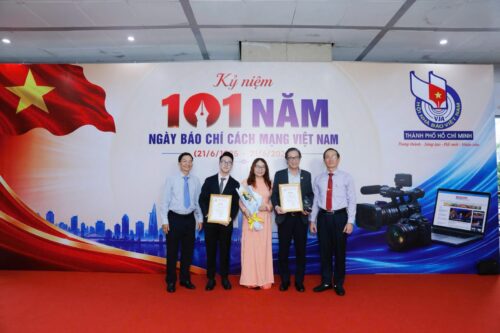
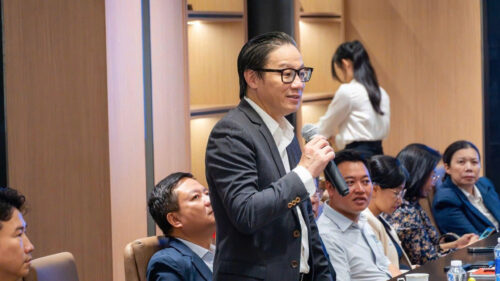
Mr. Đinh Hồng Kỳ was interviewed by Business Forum Magazine, published on March 24, 2026.
According to Mr. Dinh Hong Ky, Chairman of the Ho Chi Minh City Green Business Association, businesses that proactively embrace green transformation early will have the opportunity to redefine the rules of the game in their respective industries.
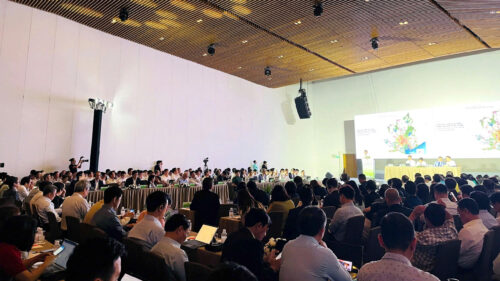
Amid the ongoing restructuring of the global economy, intensifying strategic competition, and significant shifts in supply chains, Vietnamese enterprises are facing an urgent need to innovate in order to adapt and break through. In this context, the Vietnam Chamber of Commerce and Industry (VCCI) organized the “Business Forum 2026: Vietnamese Enterprises on the Global Economic Map – Innovating to Break Through” to explore opportunities and share practical solutions from the business community.
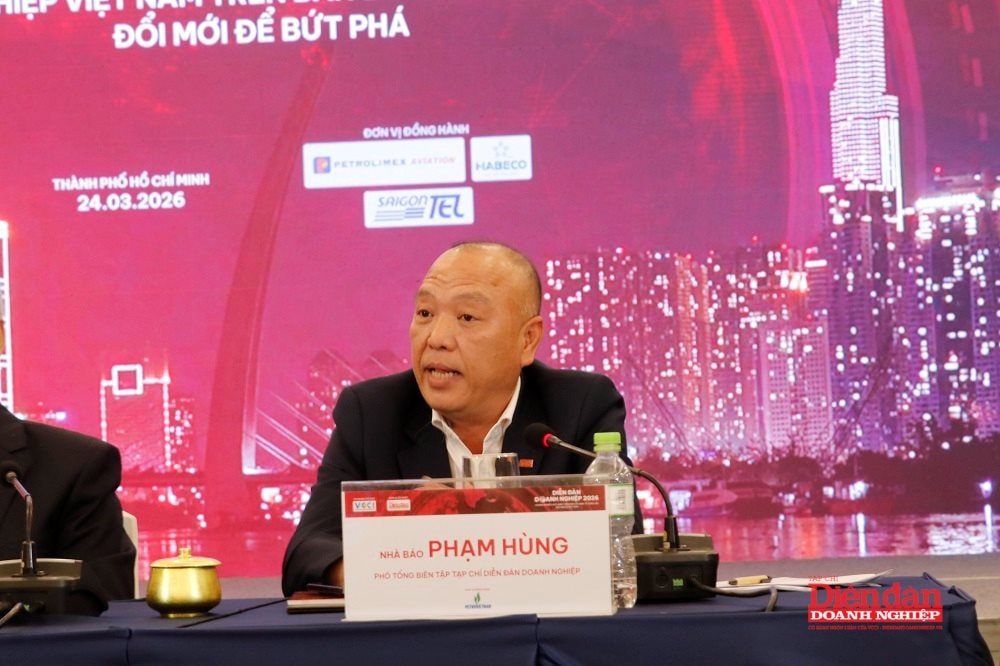
Attending the forum were Mr. Vo Tan Thanh – Vice President of VCCI; Mr. Nguyen Duc Lenh – Deputy Director of the State Bank of Vietnam (SBV), Region 2 Branch; Mr. Nguyen Ngoc Hoa – Chairman of the Ho Chi Minh City Business Association (HUBA); Mr. Dinh Hong Ky – Chairman of the Ho Chi Minh City Green Business Association; Dr. Gian Tu Trung – Founder and Chairman of PACE Institute of Management, President of IRED Institute of Education; Dr. Dinh The Hien – Economic Expert; and Mr. Phan Minh Thong – Chairman of Phuc Sinh Group.
Representing the organizing committee was journalist Pham Hung – Deputy Editor-in-Chief of Business Forum Magazine.
Speaking during the panel discussion, Mr. Dinh Hong Ky emphasized that the world is no longer operating under old rules but is shifting toward an entirely new value system, where environmental and social responsibility factors are becoming the top benchmarks.
In reality, global supply chains are being restructured around climate change goals and the journey toward achieving net-zero emissions by 2050. While businesses were previously evaluated based on cost, delivery time, output, or production scale, the game has now fundamentally changed.
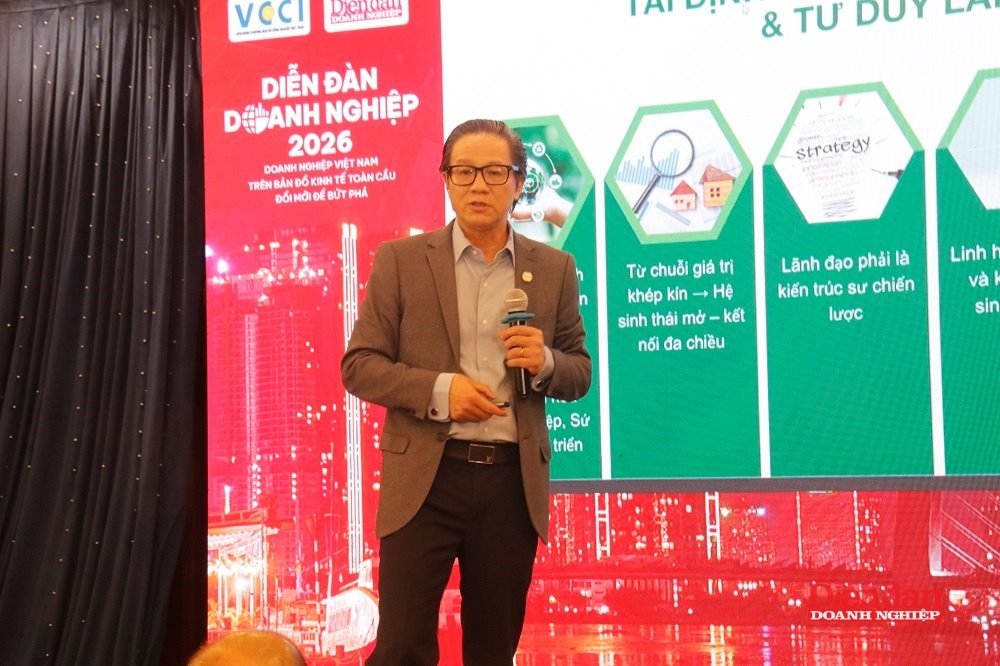
According to him, the new values demanded by the market focus on carbon metrics, traceability, environmental, social, and governance (ESG) standards, and the co-creation of value between producers and consumers. Green barriers are becoming increasingly evident through strict regulations such as the EU’s Carbon Border Adjustment Mechanism (CBAM), as well as upcoming green standards expected to be applied by the United States and Japan during 2026–2027.
The current business environment is often described by the term BANI, reflecting a world that is brittle, anxious, nonlinear, and incomprehensible. “In such a context, business plans—whether long-term or even short-term—must change at an unprecedented speed, sometimes calculated in days rather than years,” Mr. Ky noted.
Sudden policy changes, order instability, and geopolitical risks such as conflicts in the Middle East have directly impacted the flow of goods and the mindset of business leaders. Mr. Ky cited the example of textile enterprises facing concerns over maritime transport as escalating tensions threaten shipping routes and can alter the competitive landscape overnight. Therefore, green transformation is no longer a symbolic choice but has become a system of continuous and flexible adaptation.
However, the gap between actual requirements and the capabilities of domestic enterprises remains significant. Statistics show that up to 90% of Vietnamese businesses have not yet developed a clear green transformation strategy, despite 100% being directly or indirectly affected by this trend.
Small and medium-sized enterprises, which make up the majority, are facing challenges due to limited capital, lack of carbon emissions data, and shortages of ESG expertise. Even large enterprises that have implemented ESG for years still struggle to integrate these standards meaningfully into their operations.
A concerning issue highlighted by Mr. Ky is “greenwashing,” where companies focus on external image-building without making fundamental internal changes. Many sustainability reports remain superficial, lacking real data and verified standards. True green transformation requires a comprehensive restructuring of the business, placing ESG at the core of all activities. This must be concretized through measurable indicators, clear milestones, and strong commitment from the board of directors.
He also stressed that a green strategy can only succeed when it is embedded into corporate culture, spreading from top leadership to every employee and worker. In this process, green transformation must go hand in hand with digital transformation to optimize resources. Technology enables businesses to better control energy consumption, minimize waste, and effectively implement circular economy models.
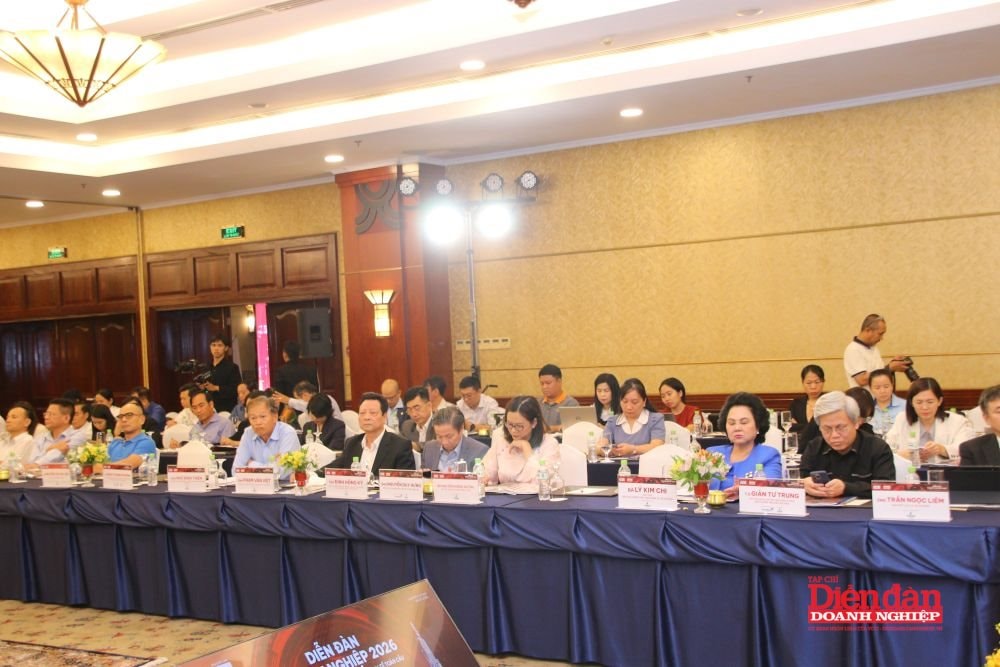
Moreover, business leaders in this era must shift their mindset—from operators to strategic architects—continuously redesigning business models to meet new demands.
A sustainable green transformation roadmap should follow four key steps: first, measuring current indicators; second, quickly optimizing resources; third, deeply integrating ESG standards; and finally, positioning a green brand in the market.
Mr. Ky also shared that in Ho Chi Minh City, the Green Business Association has been established to gather pioneering enterprises across sectors, from food and textiles to large FDI companies. Its mission is to create value diffusion through consulting, building green supply chain connections, and contributing policy recommendations to support the broader business community.
To drive systemic change, close coordination is required among four key stakeholders: the government, organizations such as VCCI, industry associations, and businesses themselves. This collaboration will help establish sector-specific standards, making it easier for enterprises to comply and enhance their competitiveness.
“Green transformation delivers four core benefits for long-term development: maintaining and expanding export and domestic markets, increasing product value, attracting investment capital, and minimizing long-term risks,” Mr. Dinh Hong Ky affirmed.
He concluded that businesses that move early in green transformation will have the opportunity to redefine the rules of the game in their industries. This is not merely about initial investment costs, but a matter of survival for Vietnamese enterprises on the global economic stage.
Businesses Accelerate from the Very Beginning of the Year: https://baodautu.vn/doanh-nghiep-tang-toc-ngay-tu-dau-nam-d536282.html