Interview with Đinh Hồng Kỳ, Chairman of SACA, published on Vietstock on March 31, 2026
The surge in construction material prices since early 2026 is putting many projects at risk of cost overruns and delays. More seriously, it is eroding corporate financial efficiency and forcing stakeholders to adjust construction plans.
Geopolitical tensions in the Middle East have escalated since February 2026, placing significant pressure on the global economy, disrupting supply chains, driving up energy prices, and increasing logistics costs.
In this context, Vietnam’s construction materials market has quickly entered a strong upward price cycle since the beginning of the year.
This trend not only pressures construction companies but also affects households. Many projects are facing cost overruns and delays, while individuals are forced to adjust or postpone construction plans as costs far exceed initial estimates.
 |
Material prices rise across the board
Data from various localities show that construction material prices have increased significantly compared to late 2025, particularly for key materials such as steel, cement, sand, and stone.
In Ho Chi Minh City, according to the Department of Construction’s price announcement on March 10, construction stone (1×2) has increased by about 30% compared to the end of 2025, reaching VND 650,000 per cubic meter (excluding VAT). Filling sand has also risen more than 8% to VND 400,000 per cubic meter. In Dong Nai, plastering sand reached VND 445,000 per cubic meter in February 2026, up 6%.
In northern Vietnam, data released by Bac Ninh authorities shows that construction stone prices rose more than 20% from early 2026 to around VND 520,000 per cubic meter, while sand prices remained relatively stable.
In Da Nang, cement prices range from VND 1.43 to 1.86 million per ton, up 10–30% compared to early 2025. Steel coil prices are around VND 15,600–15,700 per kg, up 12–18%, while rebar prices have also increased by 10–18% depending on type.
Notably, sand and stone recorded the highest increases. Construction sand now averages around VND 610,000 per cubic meter, up to 40% higher than in 2025. Stone prices have also risen significantly to about VND 640,000 per cubic meter.
According to the Ministry of Industry and Trade, the cement industry has undergone at least three price adjustments since the beginning of the year. In March, many companies raised prices by about VND 100,000 per ton, while others increased by VND 60,000–70,000 per ton to remain competitive. Similarly, construction steel prices rose by VND 350,000–600,000 per ton.
Many households delay construction plans
The surge in material prices is not only affecting businesses but also directly impacting households—the group most sensitive to cost fluctuations.
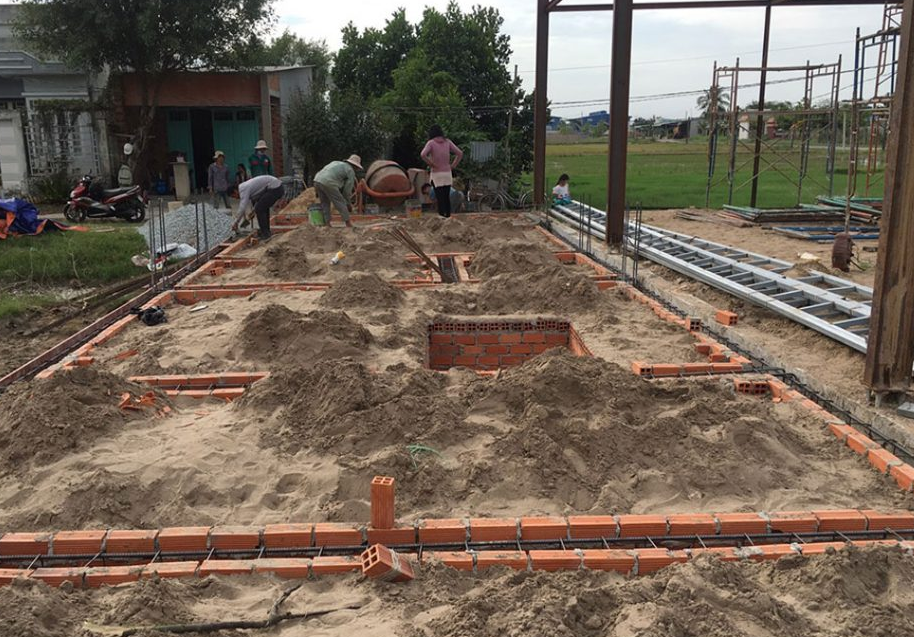
A contractor in Dong Nai shared that while working on a house foundation, the homeowner decided to pause construction after completion of the foundation, waiting for prices to stabilize. Another project scheduled to begin was also postponed.
“When fuel prices rise, almost all material costs increase—sometimes even more sharply. For example, bricks rose from VND 1,000 per unit last year to VND 1,500 now, a 50% increase. Meanwhile, sand, cement, and stone have all increased by 10–30%. This forces homeowners to adjust plans and significantly impacts small contractors like us,” he said.
A couple in Dong Nai planned to build a house with an estimated budget of VND 1 billion earlier this year. However, updated costs have increased by about VND 200 million, exceeding their financial capacity, forcing them to postpone the project.
Similarly, another household nearing project completion had to adjust certain construction items and delay non-essential interior purchases to stay within budget.
 |
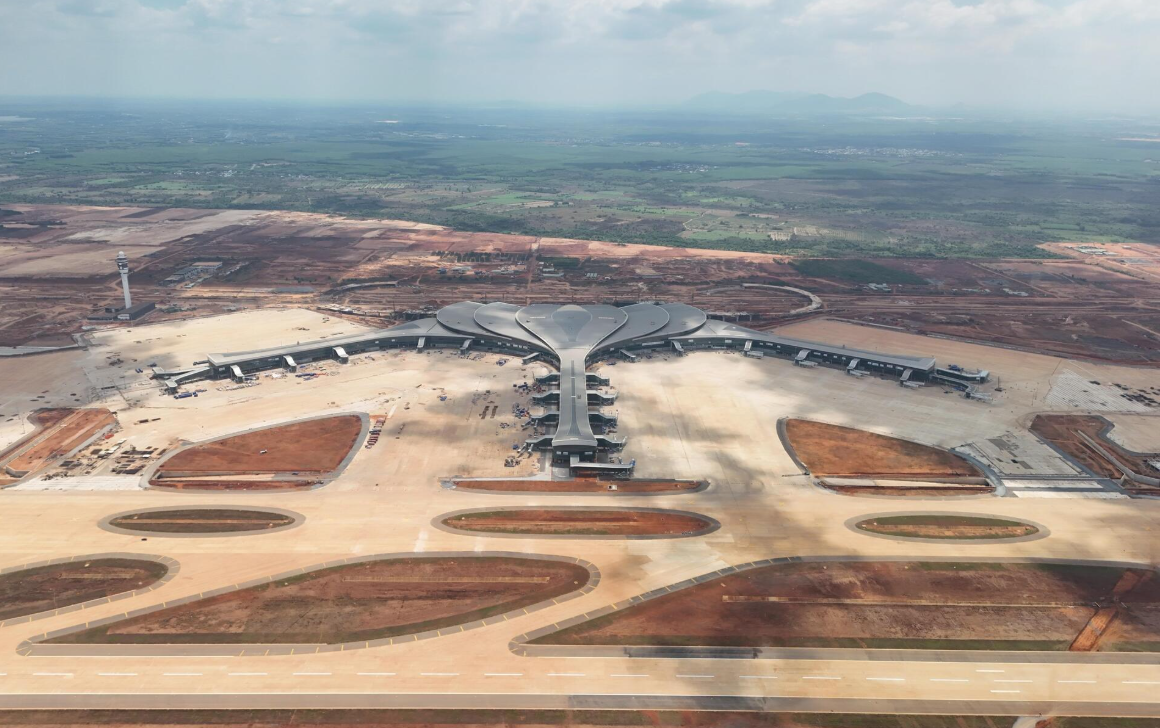
Rising construction material prices are also putting significant pressure on large-scale infrastructure projects. In reality, materials typically account for 60–70% of total construction costs, so even short-term fluctuations can significantly increase total investment.
According to Mr. Đinh Hồng Kỳ, the current price surge creates a “double impact”: increasing direct costs while also raising schedule risks. For large infrastructure projects, key inputs such as sand, stone, steel, and asphalt represent a major cost share. When prices rise or supply is disrupted, investors and contractors face not only higher costs but also cascading impacts on construction organization, workflow coordination, and cash flow.
Recognizing the issue, on March 21, the Prime Minister issued Directive No. 25/CĐ-TTg to stabilize fuel and material prices and address challenges for key transport projects—indicating this is no longer an isolated business issue but a macroeconomic concern.
For fixed-price contracts or those with outdated price adjustment mechanisms, increased costs directly reduce profit margins.
“From a corporate governance perspective, the biggest risk is not just rising prices, but the lag between market prices and payment documentation, published unit prices, and contract adjustment mechanisms. This is why many contractors still generate revenue but see declining financial performance,” Mr. Kỳ noted.
Businesses adapt their strategies
Facing cost pressures, many construction companies are shifting from a “buy-as-needed” approach to supply chain management.
A clear trend is securing material supply through long-term contracts or supplier partnerships to reduce price volatility risks.
At the same time, companies are tightening contract management, reviewing price adjustment clauses, compensation mechanisms, and payment processes to mitigate financial risks.
Additionally, optimizing designs, substituting materials, and adopting new construction technologies are being promoted to reduce dependence on volatile traditional materials.
In the short term, SACA leaders emphasize the need to resolve supply bottlenecks, particularly for sand and stone in infrastructure projects.
Improving the accuracy and timeliness of price announcements and construction price indices is also critical. When both regulators and businesses rely on updated, realistic data, the market can operate more efficiently. At the same time, transportation costs and speculative activities must be controlled.
“For public investment projects, faster cost adjustment mechanisms are needed to keep pace with market changes, avoiding situations where projects operate on outdated prices while businesses purchase at current market rates,” Mr. Kỳ added.

According to SACA, the biggest bottleneck in the current market is the mismatch between project demand and the readiness of legal supply sources.
For sand and stone, the issue lies in licensing, extraction capacity, and inter-regional transportation. When multiple projects are implemented simultaneously, even a minor disruption can lead to local shortages.
For steel, the challenge is not only production capacity but also how price changes are transmitted into contracts. Data from the Vietnam Steel Association shows that in 2025, finished steel output reached about 32.26 million tons, with consumption exceeding 31.6 million tons—indicating strong domestic demand.
Promoting alternative materials
In the long term, the market needs to standardize data and reduce delays in price publication. While there are nearly 30,000 norms and 170,000 price indicators currently available, the key requirement is timely, accurate, and practical data.
SACA recommends standardizing material classifications and specifications, increasing update frequency for volatile materials, and building a shared digital database for investors, contractors, consultants, and regulators.
Promoting new and alternative materials is also essential. Continued reliance on natural materials—especially river sand—will perpetuate cycles of shortage, price surges, and project delays.
Solutions such as artificial sand, recycled materials, low-emission materials, prefabricated components, and material-saving construction technologies are being encouraged. These are not only cost-reduction measures but also necessary steps for the construction sector to adapt to increasing market volatility.
Full article on Vietstock: https://vietstock.vn/2026/03/chu-tich-saca-dinh-hong-ky-gia-vat-lieu-xay-dung-tang-tao-tac-dong-kep-len-doanh-nghiep-768-1418148.htm