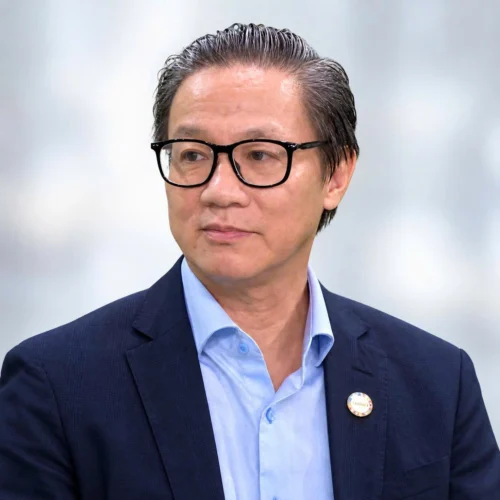
An interview with Mr. Dinh Hong Ky published in Thoi Bao Ngan Hang on October 13, 2026.
The Southern Key Economic Region plays an important role in Vietnam’s economic landscape. Many domestic and foreign investors are interested in investing capital and developing projects in the region, given its strong potential and considerable room for development. However, there is still a significant gap between investors’ interest and intentions and their actual decisions to commit capital. Mr. Dinh Hong Ky, Vice Chairman of the Ho Chi Minh City Business Association (HUBA), shared his views on the key factors that directly influence investors’ investment decisions.
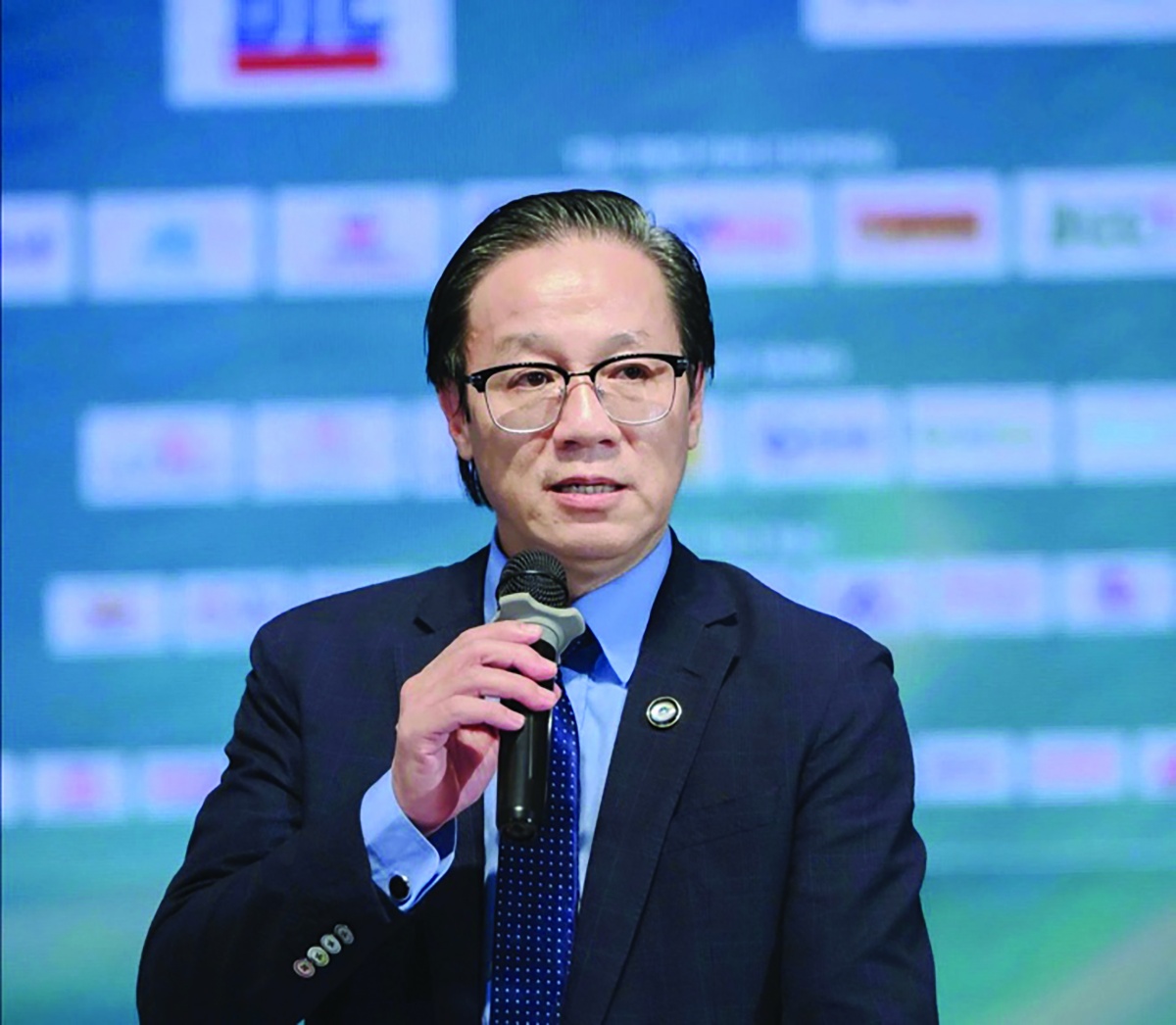
In your opinion, what are the key issues businesses consider when deciding to invest capital in a particular sector or locality?
Practical experience shows that businesses’ investment mindsets and strategies are undergoing a fairly clear shift. Businesses are becoming less dependent on individual incentives and are paying greater attention to the quality of the investment environment, the ability to connect value chains, and the implementation capacity of local authorities.
Previously, when selecting an investment location, businesses often focused on land prices, labor costs, tax incentives, and proximity to markets. These remain important factors, but they are no longer sufficient. Today, businesses simultaneously consider logistics infrastructure, energy, human resources, supply chains, digital transformation capabilities, environmental requirements, sustainable development, and connectivity to domestic and international markets when making investment decisions.
The latest figures show that investment capital continues to flow into locations with sufficiently strong investment ecosystems. In just the first eight months of 2026, Ho Chi Minh City attracted more than USD 10 billion in foreign direct investment (FDI), an increase of over 167% compared with the same period last year, reaching more than 91% of its full-year target.
Notably, approximately USD 938 million came from newly registered projects, while around USD 941 million represented additional capital invested in existing projects. This indicates that the existing investment environment remains attractive, encouraging investors to commit additional capital when they have confidence and recognize long-term potential.
For an investment with a lifecycle of 10, 20 years, or even longer, businesses do not simply ask, “Is investing here profitable today?” Instead, they consider, “Where will this locality stand in the value chain five or ten years from now?” Therefore, competition to attract investment in the coming period will not merely revolve around incentives, but also around the quality of the entire business ecosystem.
What businesses fear most is not necessarily high costs, but uncertainty about the future.
A project may be presented as highly attractive, but if a business does not know whether completing the necessary procedures will take six months, twelve months, or two years, the cost of that uncertainty may far exceed the value of any incentives received.
Therefore, instead of asking, “What additional incentives can we offer investors?” we should ask, “How much more uncertainty can we eliminate for investors?”
In my view, localities that can effectively answer this question will gain a significant advantage.
When making a large-scale strategic investment in a key economic region, what do investors expect?
One of the issues that currently causes considerable concern among businesses is the need to go through numerous stages and approach multiple government agencies when developing an investment project. Each agency performs its designated functions, but businesses are left to coordinate the entire system themselves, even though provinces and cities have long implemented the “one-stop-shop” mechanism.
This is something we can certainly change. For major investment projects, local authorities should establish a single point of contact that accompanies the project throughout its entire lifecycle, from the moment an investor begins exploring opportunities until the factory or project becomes operational. This should not merely be an office responsible for receiving applications, but a focal point with responsibility for coordination, progress monitoring, and resolving bottlenecks among departments and agencies.
Businesses do not need another government agency to work with; they need a single point of contact capable of helping resolve their problems. If this can be achieved, investment promotion will shift from a mindset of “inviting investors” to one of “accompanying investors.”
According to the Vietnam Chamber of Commerce and Industry (VCCI), approximately 70% of goods exported from the Mekong Delta still have to be transshipped through ports in Ho Chi Minh City and the Southeast region. Logistics costs in the region account for approximately 20–25% of product costs. I believe this is both a bottleneck and a clear illustration of an important reality: the economy had already established regional linkages before we began discussing the concept.
A product may be cultivated or raised in Ca Mau, processed in Can Tho, use packaging or equipment supplied by a business in Dong Nai, receive financing in Ho Chi Minh City, and be exported through the port system of the Southeast region. Administrative boundaries exist in state management, but businesses do not think in those terms when conducting economic activities. Businesses invest along value chains, not according to administrative boundaries.
Therefore, we should not frame the issue as competition among localities to attract the same investor. A better question would be: How can each dollar invested in one locality generate additional value for several other localities?
Looking ahead, do you believe the Southern Key Economic Region will continue to attract investors if its existing bottlenecks are addressed?
In the past, a locality could attract investors through inexpensive land, low labor costs, and favorable incentives. However, in the coming period, I believe competitive advantages will belong to locations that can provide certainty, consistency in governance and administration, speed of implementation, and the ability to connect ecosystems and value chains across the entire region.
The issue is no longer simply how much investment capital each locality can attract, but how those capital flows can be connected to generate greater value for the region as a whole.
If Ho Chi Minh City, together with the provinces and cities of the Southeast region and the Mekong Delta, can establish an integrated investment environment in which businesses recognize opportunities on a regional scale rather than within individual localities, we will not only attract additional capital. More importantly, we can improve the quality of investment flows, reduce business costs, and establish new value chains with greater competitiveness.
The ultimate objective must be to enable businesses to genuinely invest, produce, and conduct business within an interconnected economic space. Furthermore, we can improve the quality of investment capital, reduce business costs, and develop new value chains with greater competitiveness.
At that point, cooperation will no longer be limited to strengthening linkages among localities. The ultimate goal is to encourage businesses to confidently invest, produce, and conduct business within an integrated economic space that generates truly sustainable value.
Thank you for sharing your insights!
Link to the article: https://thoibaonganhang.vn/de-thu-hut-von-vao-vung-kinh-te-trong-diem-phia-nam-188410.html