An article by Mr. Dinh Hong Ky published in Business Forum Magazine on October 6, 2026
For decades, Vietnam has successfully driven its development by increasing investment, attracting foreign direct investment (FDI), and expanding exports. To move to a higher stage of development, however, Vietnam needs to shift from an economy of scale to an economy of speed and productivity.
Therefore, the question should no longer simply be how much more capital the economy needs, but rather how much additional value each unit of capital can generate. This is becoming increasingly important as Vietnamese businesses must simultaneously invest in technology, green transformation, environmental standards, and supply chain upgrades.
Value Lies in Connectivity
Ho Chi Minh City offers a noteworthy example. The post-merger economic landscape brings together distinct capabilities: the core of Ho Chi Minh City is strong in finance, commerce, technology, human capital, and innovation; Binh Duong has a well-developed industrial manufacturing base; while Ba Ria–Vung Tau holds advantages in seaports, logistics, energy, and the marine economy.
If these three components are simply placed side by side, what we have is a larger city. But if capital from the financial center can flow into industrial enterprises, research from universities can move into factories, and products can travel directly from factories through logistics networks to global markets, then we have an entirely different economic structure.
This is also why competition today is no longer simply business versus business. Increasingly, ecosystems compete with ecosystems. No matter how hard a Vietnamese company strives, it will find it difficult to go far if it is backed by costly logistics, weak technology, short-term capital, and a research system disconnected from the market.
Among the resources of an economy, I am particularly concerned with time. In business, a single month can sometimes determine an entire market. A factory that begins operations six months earlier may win customers ahead of its competitors; a product launched three months sooner may become the market leader. Conversely, a project delayed by two years may completely lose its original economic rationale.
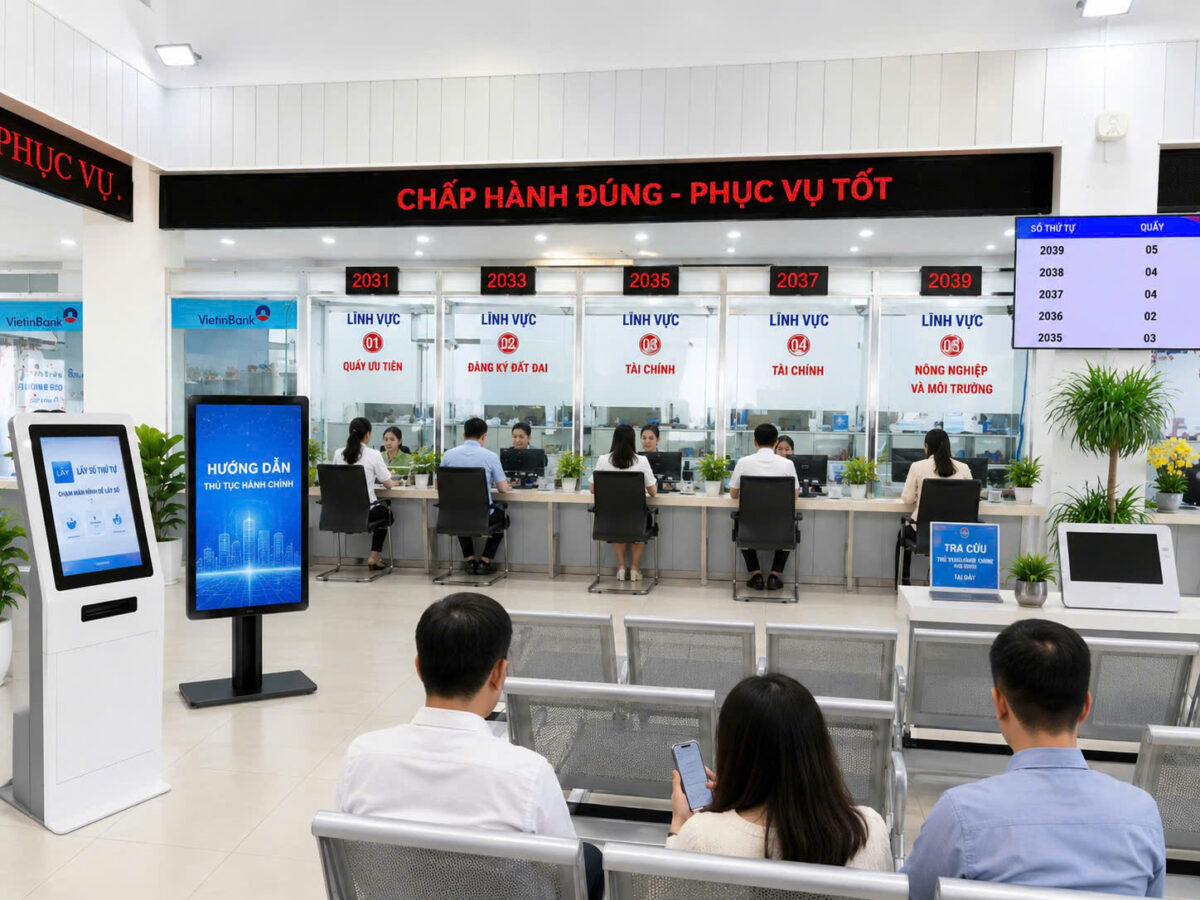
Among the resources of an economy, I am particularly concerned with time. I call the months and years that businesses lose because of unnecessary waiting “waiting costs.” These costs do not appear in any official fee schedule, yet businesses pay for them through lost business opportunities, lost orders, and diminished competitiveness.
Therefore, the benchmark for a new generation of institutional reform should shift from asking, “How many administrative procedures have government agencies eliminated?” to “How much time have businesses regained?”
Businesses should also be able to accumulate “compliance credibility.” A strong history of compliance should become a valuable asset, allowing businesses to face fewer inspections, complete procedures more quickly, and benefit from more appropriate post-audit mechanisms.
Achieving this requires a unified digital compliance profile. Digital transformation cannot be considered truly successful if businesses are still required to act as couriers, carrying data from one government agency to another.
When data systems are interconnected, the government can adopt a risk-based management approach. Inspection resources can then be concentrated where risks are highest, while businesses with strong compliance records can devote more time to customers, products, and technology.
Technology Must Enter the Factory
Artificial intelligence, digital transformation, and innovation now appear in almost every development strategy. From the perspective of someone working in manufacturing, however, I tend to apply a fairly simple criterion: Can technology change the business equation?
Even in the construction materials industry, data can help control raw-material consumption, sensors can monitor equipment, AI can support demand forecasting, design technologies can create new products, and environmental data systems can help businesses measure emissions.
From this practical experience, I have come to see that digital transformation, green transformation, and productivity improvement are not three separate journeys. They converge around data. Without data, businesses cannot identify where waste occurs; calculating carbon emissions becomes difficult; AI struggles to generate meaningful value; and companies find it harder to meet the increasingly stringent requirements of international supply chains.
For small and medium-sized enterprises (SMEs), the greatest barrier to technological transformation is not necessarily awareness, but rather return on investment. A business owner will not spend VND 1 billion on AI or automation simply because it is a trend. They will ask: If I invest VND 1 billion, how much electricity will I save? How much waste will I reduce? How much will productivity increase? And how long will it take to recover the investment?
SMEs face another challenge: they cannot independently own every capability they need, such as laboratories, AI teams, cybersecurity experts, ESG specialists, or carbon measurement systems. It is therefore necessary to develop shared infrastructure that allows smaller businesses to access capabilities that, in the past, only large enterprises could afford to possess.
This is also where business associations need to redefine their role. The business association of the future should not merely organize events or convey policy recommendations. It can become part of the economy’s soft infrastructure—a platform that aggregates the needs of multiple businesses so they can share access to technology, expertise, data, and market connections.
What Businesses Expect
After many years of managing manufacturing businesses and participating in business representative organizations, I have observed that businesses’ expectations of the government are changing. They no longer ask only how much support the government can provide. Increasingly, they are concerned with a more fundamental question: Is there a transparent playing field and sufficient room for businesses to grow?
The government does not need to replace the market, but it does need to perform well in areas that individual businesses cannot address on their own: infrastructure, the rules of the game, public data, standards, education, foundational research, and the protection of fair competition.
Therefore, when discussing growth, from an entrepreneur’s perspective, I would frame the issue in more concrete terms: How many months earlier can a project become operational? How many hours faster can a container reach the port? By what percentage can a factory reduce its energy consumption? How many years does a small business need to become a medium-sized enterprise? How much university research actually makes its way into factories? And how many additional hours can an entrepreneur devote to customers, technology, and products instead of administrative procedures?
Double-digit growth does not begin with the number 10%. It begins with the speed at which an idea becomes a product, capital becomes productive capacity, research becomes technology, and an opportunity becomes a business.
If we can shorten these timeframes across the entire economy, Vietnam will not only grow faster—it will also achieve more sustainable growth.
Article images at: Bài báo
Original article: https://diendandoanhnghiep.vn/bai-toan-toc-do-cua-nen-kinh-te-10185436.html