“From father to son” – this saying doesn’t seem to hold entirely true for many family businesses in Vietnam, especially large private companies.
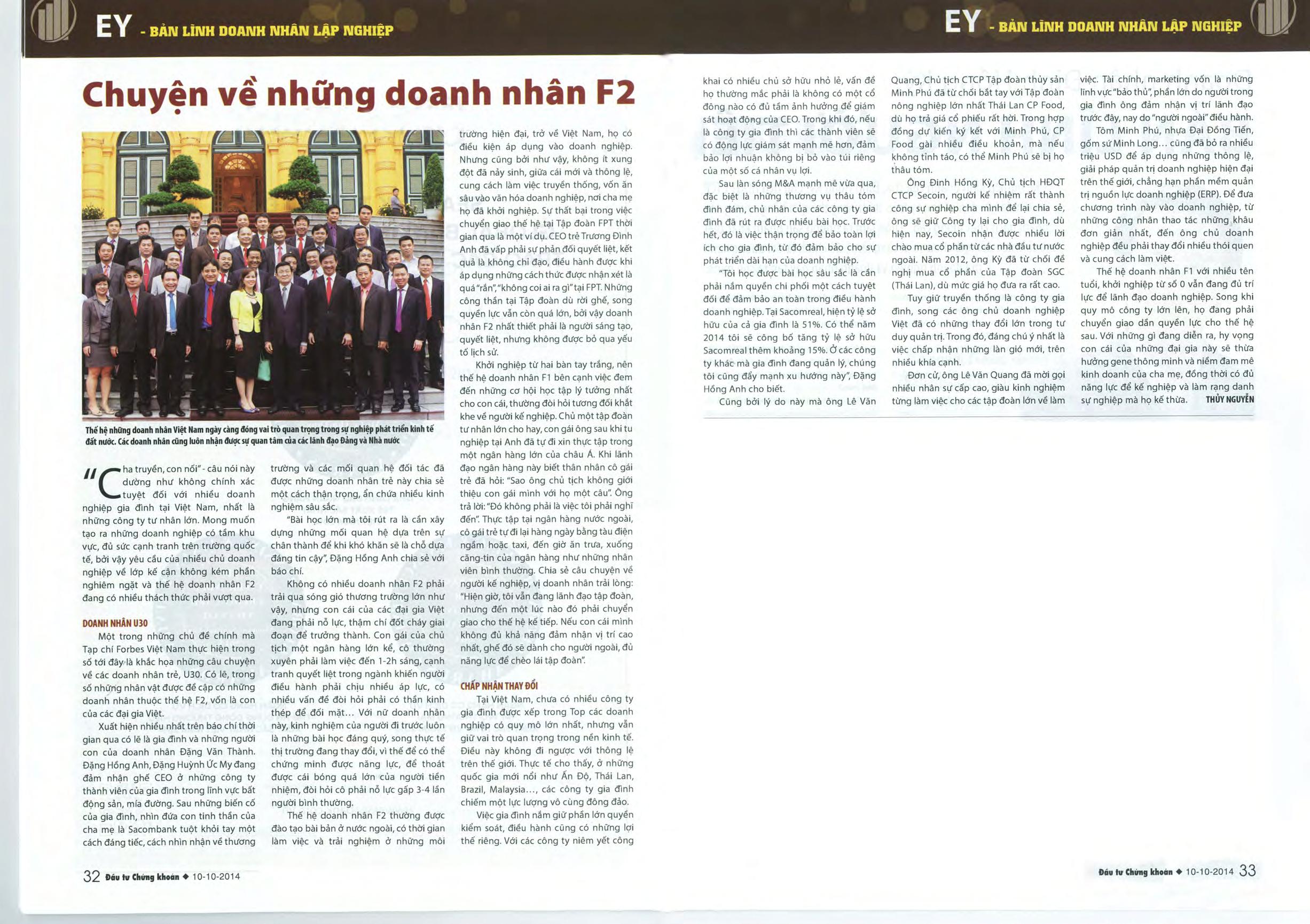
The desire to build regional-scale enterprises capable of competing internationally means that demands on successors are equally exacting, and the second-generation (F2) entrepreneurs face numerous challenges they must overcome.
Young Entrepreneurs Under 30
One of the main features in the upcoming issue of Forbes Vietnam highlights stories of under-30 entrepreneurs—many of whom are F2, the children of Vietnam’s tycoons.
A prominent example frequently featured in the media is the family of Đặng Văn Thành. His children, Đặng Hồng Anh and Đặng Huỳnh Ức My, now serve as CEOs of family-affiliated companies in real estate and sugar industries. After enduring the upheaval of losing Sacombank—an enterprise created by their parents—their cautious reflections on the marketplace and partnerships reveal deep, valuable insights:
“The great lesson I’ve learned is to build relationships based on sincerity, so that in times of difficulty they become reliable support,” said Đặng Hồng Anh to the press.
Few F2 entrepreneurs have faced such dramatic corporate crises, but many are compelled to accelerate their growth in response. One daughter of a major bank chairman reportedly works until 1–2 a.m., enduring intense pressure in a competitive sector that demands steel nerves.
To step out from a predecessor’s shadow, she admits needing to work 3–4 times harder than the average person.
F2 entrepreneurs are often educated abroad and bring modern work experiences back to Vietnam. Yet this also creates conflicts between fresh ideas and traditional corporate customs established by their parents. One case in point: FPT’s attempt to appoint its young CEO, Trương Đình Anh, failed due to resistance—his “hardline” management style clashed with entrenched power structures, showing that F2s must innovate while respecting history.
Family-Controlled Businesses and Governance
In Vietnam, family-controlled businesses still play a crucial economic role, even if few rank among the country’s largest companies. Globally, family firms are prominent in emerging economies like India, Thailand, Brazil, and Malaysia.
One advantage is strong internal oversight—family members can hold CEOs accountable more effectively than dispersed shareholders. After recent waves of M&A, many family businesses have learned the importance of maintaining control to safeguard long-term interests.
“I learned it is vital to maintain absolute controlling rights to guarantee stable leadership. At Sacomreal, our family holds 51%. In 2014 we planned to increase that by another 15%. We are reinforcing this structure across our other businesses,” said Đặng Hồng Anh.
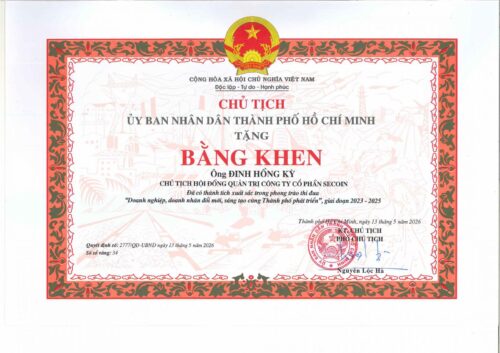
For example, Minh Phú Seafood’s chairman, Lê Văn Quang, declined a partnership offer from Thailand’s CP Food—despite attractive valuations—due to concerns about being taken over. Likewise, Secoin’s Chairman Đinh Hồng Kỳ refused a high-priced offer from Thailand’s SGC in 2012, affirming his commitment to keeping the company in family hands.
Embracing Modern Management
While staying family-led, many Vietnamese F1 owners are adopting modern governance practices and welcoming external talent.
Minh Phú’s chairman, Lê Văn Quang, hired experienced executives with multinational track records to oversee traditionally conservative departments like finance and marketing, shifting leadership roles away from family members.
Companies such as Minh Phú (seafood), Đại Đồng Tiến (plastic), and Minh Long (ceramics) have invested millions in state-of-the-art enterprise resource planning (ERP) systems. Implementing these solutions required changes at every level—from assembly-line staff to the top leadership—in how work is done.
Looking Ahead
The first-generation (F1) entrepreneurs—many of whom started from scratch—still have the intellect and energy to lead. But as their companies scale, they are steadily transitioning leadership to the next generation.
What remains to be seen is whether these F2 heirs will inherit not only their parents’ intellect and entrepreneurial spirit but also the ability to uphold and enhance the legacy they receive.