


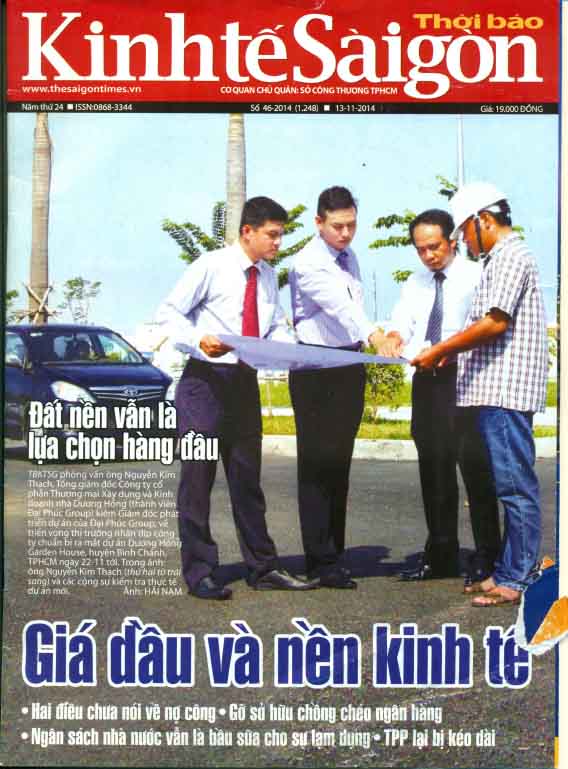
Article by Mr. Dinh Hong Ky, published in Saigon Economic Times on November 13, 2014. In recent days, a story has been circulating about a Vietnamese man who was cheated when buying an iPhone 6 at a store in Singapore. The Vietnamese tourist with a monthly salary of 200 USD had to kneel down and cry, begging for a refund, while being ridiculed by the store owner until he received a portion of his money back. The image of a civilized and disciplined Singapore has been somewhat damaged.

In recent days, the story of a Vietnamese person being scammed when buying an iPhone 6 at a store in Singapore has been making headlines. The Vietnamese tourist with a monthly salary of 200 USD had to kneel down and cry, begging for a refund, while the store owner ridiculed him until he got a part of his money back. The image of a civilized and disciplined Singapore was somewhat damaged. But then the Singaporeans themselves regained their image by calling for donations online to support the scammed Vietnamese man. The Singaporeans’ lesson in crisis resolution is wonderful: when their image was somewhat tarnished, with a beautiful action, they not only regained it but also raised the country’s profile. It was a small incident, but major international media agencies such as the BBC (UK) and the Straits Times magazine had to report on this story. After all, in the eyes of the world, this story left an image of a humane Singapore, while our Vietnam is somewhat pitiful!
Last month, the international travel website Sleepinginairports rated the two largest airports in Vietnam, Noi Bai (Hanoi) and Tan Son Nhat (Ho Chi Minh City), among the top 10 worst airports in the world. There has been a lot of debate, but to be fair, considering the general context of the country and the world, this rating is understandable. Fortunately, we don’t need to solve the airport crisis because someone else has helped. The BusinessInsider website has just announced that Vietnam is one of the 20 countries rated as the most livable in the world. Interestingly, the real “paradises” in the world such as the US or countries in Western Europe or Northern Europe are not in this top 20!
However, if you read carefully, they only judge us as worth living because we have many beautiful landscapes and delicious food. Surely if we do not solve the problems of going to the hospital with envelopes, traffic police accepting bribes on every road, students having to “feed” their teachers by studying until 9-10pm at night, … then surely those assessments will only bring humor.
A few days ago, a crisis broke out when an American company Bio-Rad Laboratories Inc. had to pay a fine of about 55 million USD to the US government to settle allegations of bribing health officials in three countries including Vietnam. Recall that in recent times, similar stories have occurred such as the case of Securency and Note Printing Australia of Australia having to go to court for allegations of bribery in Vietnam to receive a contract to print polymer money. Or the case of the Japanese court bringing to court the Japan Transport Consulting Company (JTC) accused of bribing officials of the Vietnamese railway industry.
The problem is when discovering the lack of transparency of their businesses creating a bad image for the country, how did the governments of these countries deal with the crisis events? Instead of considering these businesses as bringing in revenue for their countries, they need businesses to operate legally. The US, Australian and Japanese governments in the above stories wanted to prove to the world that they are not only transparent in their countries but they require their businesses to be transparent globally. Thereby creating a good image for their country and government.
Back to us, Vietnam, how did we handle these crisis stories? Why did these bribery cases happen in Vietnam but Vietnam did not detect them but the governments of other countries did? Once discovered, have we dealt with it thoroughly or have we gradually let it slip into oblivion? What must we do to improve the image of a country that the WEF ranked 109th out of 144 countries assessed in terms of extrajudicial costs and bribery!
Sai Gon, 06/11/2014
Dinh Hong Ky

