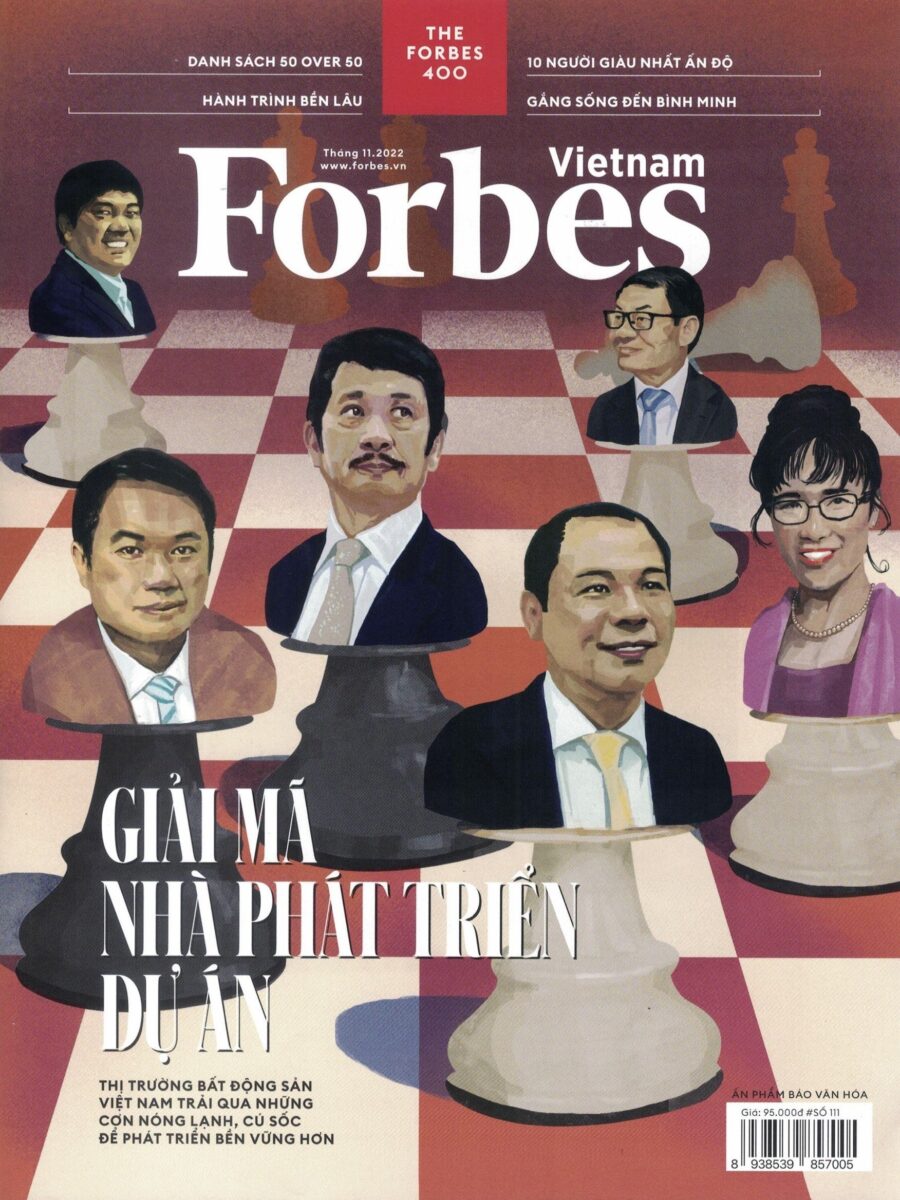
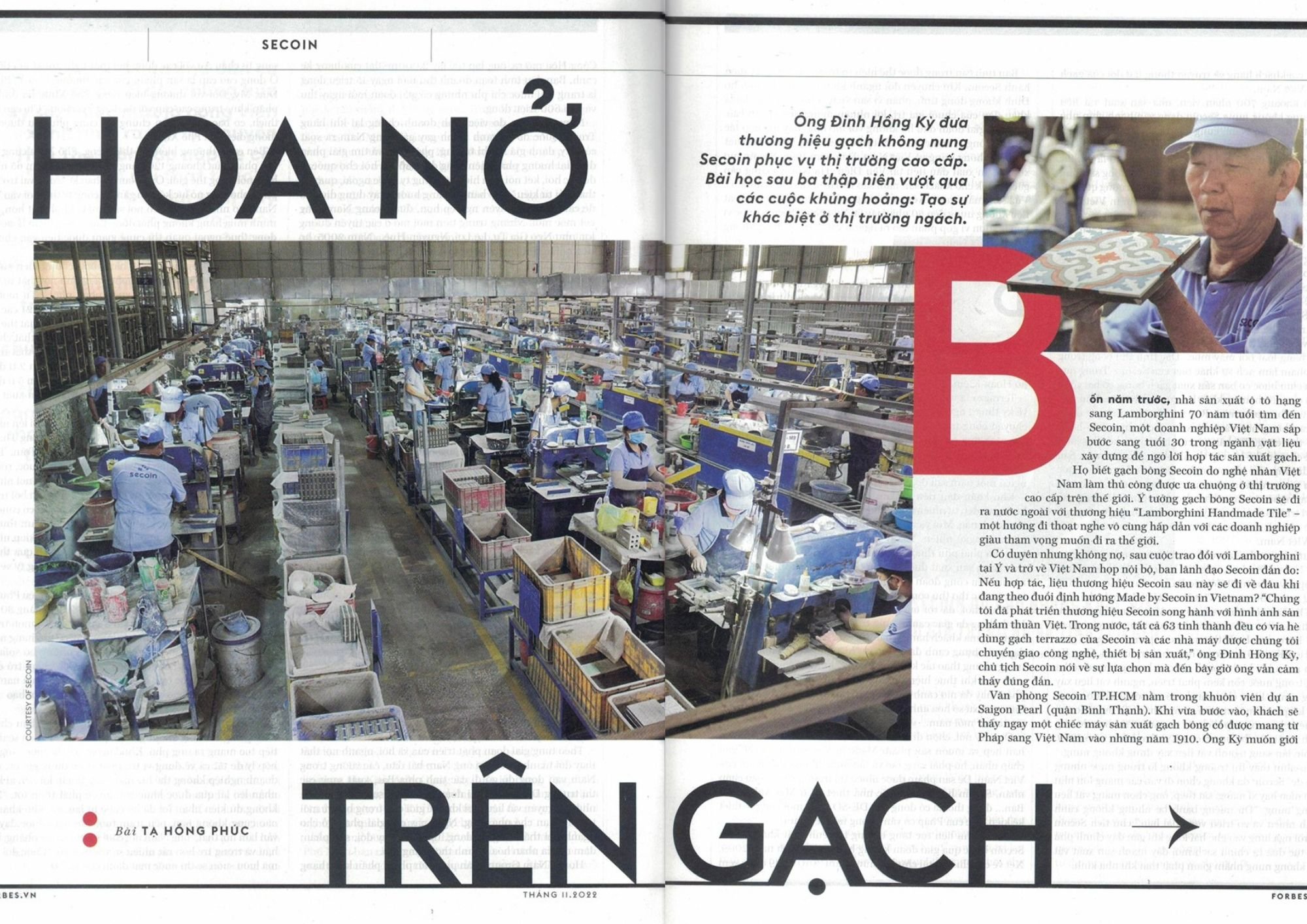
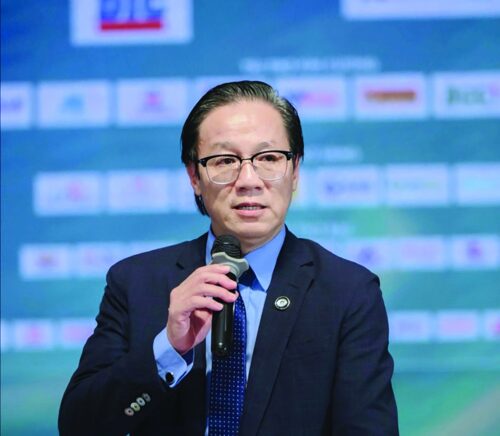
“Flowers Blooming on Bricks” is the title of an article published in FORBES Vietnam issue 111, released in November 2022.
The article tells the story of Mr. Dinh Hong Ky and Secoin on their journey to the global market with uniqueness and differentiation:
“Mr. Dinh Hong Ky brings the Secoin non-fired brick brand to serve the high-end market. The lesson after three decades of overcoming crises: Creating distinction in a niche market.”
“Four years ago, the 70-year-old luxury car manufacturer Lamborghini approached Secoin, a nearly 30-year-old Vietnamese enterprise in the building materials industry, to propose cooperation in tile production. They knew that Secoin’s handmade cement tiles, crafted by Vietnamese artisans, were favored in the high-end global market.
The idea of Secoin’s cement tiles going abroad under the brand ‘Lamborghini Handmade Tile’ sounded extremely attractive for ambitious companies aiming to go global.
Fate brought them together but without obligation. After discussions with Lamborghini in Italy and returning to Vietnam for internal meetings, Secoin’s leadership hesitated: If cooperating, where would the Secoin brand go, since they were pursuing the direction of ‘Made by Secoin in Vietnam’?
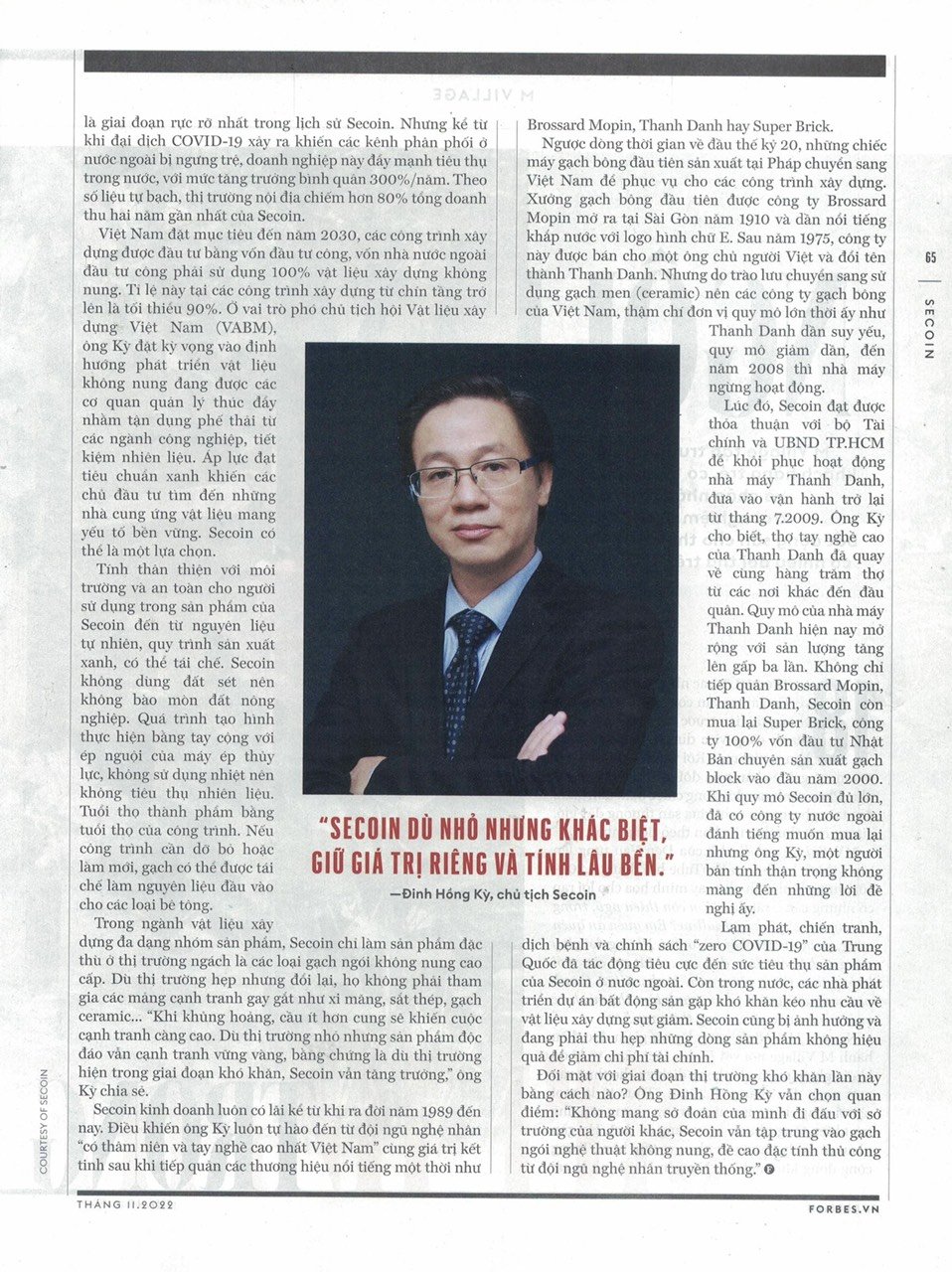
“We have developed the Secoin brand alongside the image of purely Vietnamese products. Domestically, all 63 provinces and cities use Secoin terrazzo tiles for sidewalks, and the factories we transferred technology and equipment to produce them,” said Mr. Dinh Hong Ky, chairman of Secoin, about the decision he still feels was right.
Secoin’s Ho Chi Minh City office is located within the Saigon Pearl project (Binh Thanh District). Upon entering, visitors immediately see an antique cement tile machine imported from France to Vietnam around 1910. Mr. Ky wants to introduce customers to the long-standing tradition of Vietnamese cement tiles.
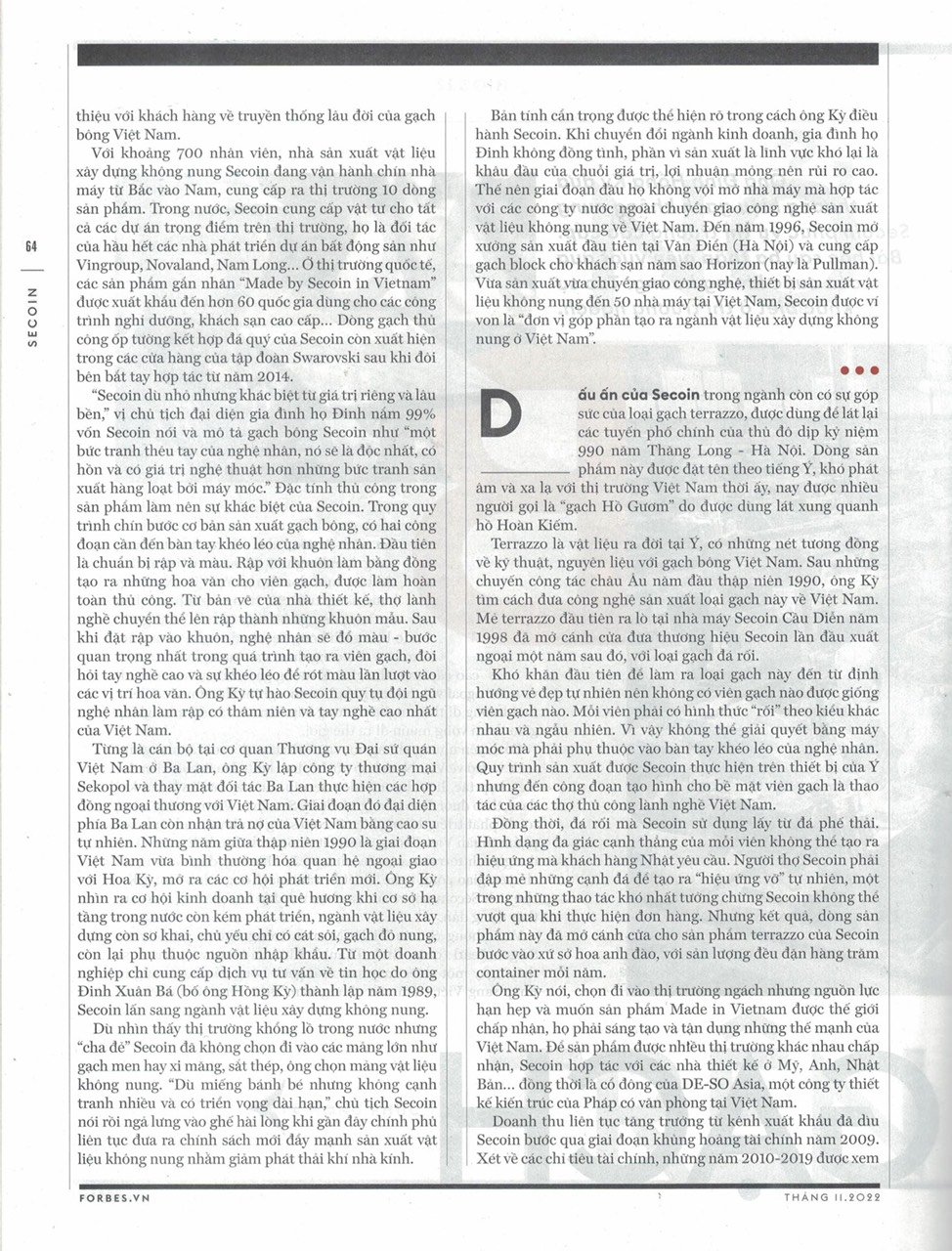
With about 700 employees, Secoin, a non-fired building materials manufacturer, operates nine factories from north to south, supplying ten product lines to the market.
Domestically, Secoin supplies materials for all key projects and is a partner of most major real estate developers like Vingroup, Novaland, Nam Long…
Internationally, products labeled ‘Made by Secoin in Vietnam’ are exported to over 60 countries for resort and luxury hotel projects.
Secoin’s handmade wall tiles combined with precious stones also appear in Swarovski stores after their cooperation began in 2014.
“Though small, Secoin is different by its unique and durable value,” said the chairman representing the Dinh family owning 99% of Secoin, describing Secoin’s cement tiles as “a hand-embroidered painting by artisans—unique, soulful, and artistically valuable beyond mass-produced machine-made paintings.”
The handcrafted nature of the product makes Secoin stand out. In the nine basic steps of producing cement tiles, two require the skilled hands of artisans. First is preparing the copper molds and colors. The molds create patterns on the tiles and are made entirely by hand. From designers’ drawings, skilled workers transfer designs onto molds as templates.
After placing the mold, artisans pour the colors—the most important step requiring high skill and dexterity to apply colors sequentially to each pattern section. Mr. Ky proudly says Secoin gathers the most experienced and skilled mold artisans in Vietnam.
Once an official at the Trade Office of the Vietnamese Embassy in Poland, Mr. Ky established Sekopol Trading Company and represented Polish partners in foreign trade contracts with Vietnam. At that time, Poland even accepted natural rubber from Vietnam as debt repayment. The mid-1990s marked Vietnam’s normalization of diplomatic relations with the U.S., opening new development opportunities.
Mr. Ky saw business potential in the homeland where infrastructure was underdeveloped and the building materials sector was rudimentary—mostly sand, gravel, and fired red bricks, with other supplies imported. From a consulting IT services company founded in 1989 by Mr. Ky’s father, Dinh Xuan Ba, Secoin moved into non-fired building materials.
Despite seeing a huge domestic market, Secoin’s founder avoided big segments like ceramic tiles, cement, steel, choosing non-fired materials instead. “Though the slice is small, competition is less and prospects are long-term,” said the chairman, reclining satisfied as recent government policies promote non-fired materials to reduce greenhouse gas emissions.
Mr. Ky’s cautious nature shows clearly in Secoin’s management. When switching industries, the Dinh family disagreed—production is hard, is the start of the value chain, has thin margins, and high risks.
Thus, initially they didn’t rush to open factories but cooperated with foreign companies to transfer non-fired materials production technology to Vietnam. In 1996, Secoin opened its first workshop in Van Dien (Hanoi), supplying block bricks for the five-star Horizon Hotel (now Pullman).
While producing, Secoin transferred technology and production equipment for non-fired materials to 50 factories across Vietnam and is dubbed “a contributor to creating the non-fired building materials industry in Vietnam.”
Secoin’s mark in the industry also includes Terrazzo tiles, used to pave main streets of Hanoi for the 990th anniversary of Thang Long – Hanoi. The product’s name is Italian, difficult to pronounce and unfamiliar to Vietnam’s market then; now it is often called “Ho Guom tiles” since used around Hoan Kiem Lake.
Terrazzo originated in Italy and shares technical and material similarities with Vietnamese cement tiles. After business trips to Europe in the early 1990s, Mr. Ky brought production technology of this tile type to Vietnam. The first Terrazzo batch at Secoin’s Cau Dien factory in 1998 opened the door for Secoin’s brand to export abroad a year later with mosaic tiles.
The first challenge was that the natural beauty concept required no two tiles to be identical. Each tile must have a unique “mosaic” appearance, random and different. This couldn’t be done by machines but depended on artisan skill. Secoin’s production used Italian equipment, but surface shaping was done manually by skilled Vietnamese craftsmen.
Additionally, Secoin’s mosaic stones were made from recycled stone waste. The straight-edged polygonal shape couldn’t produce the “broken effect” required by Japanese clients. Secoin’s artisans had to chip stone edges to create a natural “broken” effect—one of the hardest steps they nearly couldn’t overcome for the order.
Yet the product line opened the door for Secoin’s Terrazzo to enter Japan, with hundreds of containers exported annually.
Mr. Ky says that entering niche markets with limited resources and wanting “Made in Vietnam” products accepted globally requires creativity and leveraging Vietnam’s strengths. To appeal to diverse markets, Secoin cooperates with designers from the U.S., UK, Japan, and is a shareholder of DE-SO Asia, a French architectural design firm with an office in Vietnam.
Revenue growth from exports helped Secoin overcome the 2009 financial crisis. Financially, 2010–2019 was Secoin’s most brilliant decade.
Since COVID-19 disrupted overseas distribution channels, the company has boosted domestic sales, averaging 300% annual growth. Self-reported data shows the domestic market accounted for over 80% of Secoin’s total revenue in the last two years.
Vietnam aims that by 2030, all public investment and state-funded construction projects must use 100% non-fired building materials. For buildings nine stories and above, the minimum is 90%. As vice chairman of the Vietnam Building Materials Association (VBM), Mr. Ky expects the development of non-fired materials pushed by authorities to utilize industrial waste and save fuel.
Pressure to meet green standards drives investors to seek sustainable materials suppliers. Secoin is a potential choice. Its environmentally friendly, user-safe products come from natural raw materials, green production processes, and recyclability.
Secoin doesn’t use clay, so it doesn’t erode agricultural land. Tile shaping is manual combined with cold pressing by hydraulic presses, no heat used, thus no fuel consumption. The product’s lifespan equals the building’s lifespan. If the building is dismantled or renovated, tiles can be recycled as input material for concrete.
In a diverse building materials industry, Secoin focuses on niche high-end non-fired bricks and tiles. Though niche, they avoid fierce competition in cement, steel, or ceramic tiles.
“When crisis hits, demand falls below supply increasing competition. Though the market is small, unique products compete strongly. Evidence is that Secoin still grows despite the market difficulties,” said Mr. Ky.
Secoin has been profitable since its founding in 1989. What Mr. Ky is most proud of is the team of artisans “with the most experience and skills in Vietnam” and the value from acquiring once-famous brands like Brossard Mopin, Thanh Danh, and Super Brick.
Back to the early 20th century, the first cement tile machines made in France came to Vietnam for construction projects. The first cement tile workshop was opened by Brossard Mopin in Saigon in 1910, becoming famous nationwide with an E-shaped logo.
After 1975, the company was sold to a Vietnamese owner and renamed Thanh Danh. However, as ceramic tiles became popular, Vietnam’s cement tile companies, even large ones like Thanh Danh, declined and by 2008 the factory stopped operating.
At that time, Secoin reached an agreement with the Ministry of Finance and Ho Chi Minh City People’s Committee to restore Thanh Danh’s factory, which resumed operation in July 2009. Mr. Ky said highly skilled Thanh Danh artisans returned, joined by hundreds of others.
Thanh Danh’s factory has since expanded with triple output. Besides acquiring Brossard Mopin and Thanh Danh, Secoin also bought Super Brick, a 100% Japanese-invested block brick producer in early 2000. When Secoin grew large enough, foreign companies expressed interest in buying it, but cautious Mr. Ky declined.
Inflation, war, pandemics, and China’s zero-COVID policy negatively affected Secoin’s overseas sales. Domestically, real estate developers’ difficulties reduced building materials demand. Secoin has been impacted and is narrowing unprofitable product lines to reduce financial costs.
How to face this difficult market phase? Mr. Dinh Hong Ky maintains: “Don’t bring your weaknesses to fight others’ strengths. Secoin still focuses on artistic non-fired bricks and tiles, emphasizing handcrafted qualities from traditional artisans.”
Source: Forbes Vietnam Online – November 2022