Dinh Hong Ky gave an interview published in VTC News on May 27, 2026.
For many years, Ho Chi Minh City has not lacked businesses willing to invest, major ideas, or social capital. What has been lacking is the speed of turning decisions into action.
Commenting on the Draft Special Urban Law for Ho Chi Minh City, Đinh Hồng Kỳ – Vice Chairman of the Ho Chi Minh City Business Association (HUBA) and Chairman of Secoin Company – stated that the most important issue of the Law is not how many additional mechanisms Ho Chi Minh City may receive, but whether the city has sufficient institutional capacity to compete with the region’s megacities.
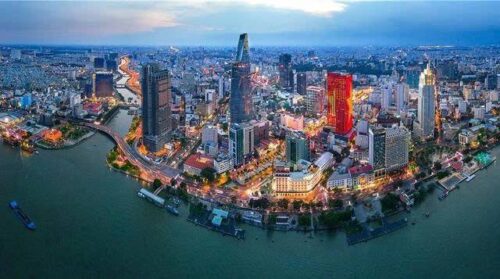
Ho Chi Minh City is facing a paradox in which its urban scale has already reached the level of a “megacity,” while its governance model still heavily reflects the mindset of a traditional administrative city. A megacity cannot develop if every decision must continue to follow the “request – wait – guidance” model.
According to Mr. Kỳ, Ho Chi Minh City has a population of 14 million people and contributes approximately one-fourth of Vietnam’s GDP. However, if infrastructure, governance, and institutions are not “super-connected,” the city’s large scale could become a burden rather than an advantage.
“The draft Law marks a very significant step forward by, for the first time, introducing the mindset of ‘comprehensive and radical decentralization’ and prioritizing the application of the Special Urban Law in cases of legal conflict. This is the right direction.
However, the bigger issue is no longer whether authority exists, but whether authority comes together with implementation responsibility, and whether the system creates enough motivation for people to dare to make decisions,” Mr. Kỳ said.
The HUBA Vice Chairman noted that for many years, Ho Chi Minh City has not lacked businesses wanting to invest, major ideas, or social capital. What is lacking is the speed of transforming decisions into action.
Projects are delayed for years not because of a lack of funding, but because it remains unclear who has the authority to decide, how long decisions take, and who bears responsibility if delays occur.
Therefore, the Special Urban Law should strongly shift from a “process control” mindset toward “results-based governance.” Instead of management through paper-based records and fragmented procedures, Ho Chi Minh City should be allowed to establish a genuine digital administration, a shared data system, and a single focal point for handling procedures. There must also be accountability mechanisms tied to processing deadlines.
In particular, the city should shift from pre-inspection to post-inspection based on data and compliance levels. Businesses with good compliance records should face fewer inspections; data that already exists should not need to be resubmitted. Overdue procedures should either be automatically approved or require agencies to explain accountability.
The businessman also argued that the Special Urban Law should view Ho Chi Minh City as a regional development ecosystem rather than an isolated administrative boundary.
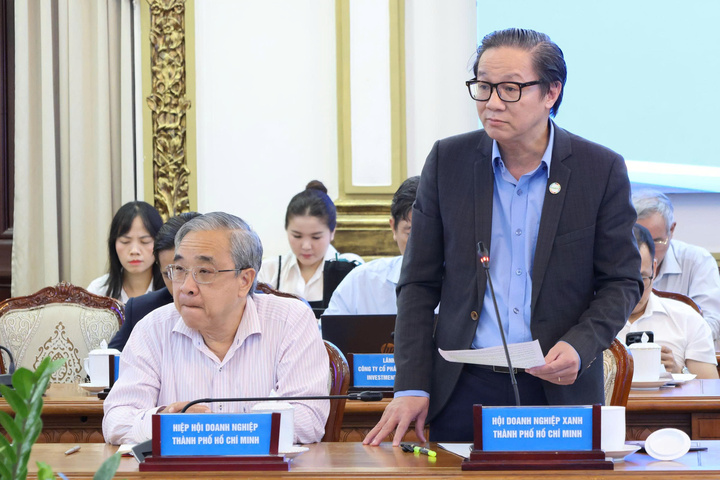
Issues such as metro systems, logistics, financial centers, innovation, green transition, digital transformation, flood prevention, and maritime economic development have already gone beyond the city’s boundaries. Without a sufficiently strong regional coordination mechanism, investment fragmentation, disconnected infrastructure, and persistently high logistics costs will continue.
Mr. Kỳ proposed that the Law should dedicate a separate chapter or section to controlled policy experimentation mechanisms, including five specific groups of mechanisms.
These include geographically based sandboxes, where pilot implementation could take place in areas such as Thủ Thiêm, Cần Giờ, Cái Mép Hạ, or selected TOD models.
There should also be time-limited sandboxes for emerging sectors such as fintech, digital assets, autonomous vehicles, digital healthcare, and paperless logistics.
Additionally, there should be “controlled legal exemption” mechanisms, allowing businesses participating in pilot programs to be exempt from certain legal procedures within defined limits.
There should also be mechanisms ensuring that “failed experiments are not criminalized,” as well as real-time data evaluation systems that allow Ho Chi Minh City to use real-time digital data, urban governance systems, and AI-powered risk analysis for continuous policy impact assessment.
“If the Law merely adds a few preferential mechanisms, Ho Chi Minh City’s economic locomotive may continue running fast, but still on the ‘old tracks.’
However, if the Law can establish genuine autonomy, rapid decision-making mechanisms, a data-driven digital administration, and an institutional environment open enough for innovation, Ho Chi Minh City will have the opportunity to move onto a ‘new development track’ for the coming decades,” Mr. Kỳ affirmed.
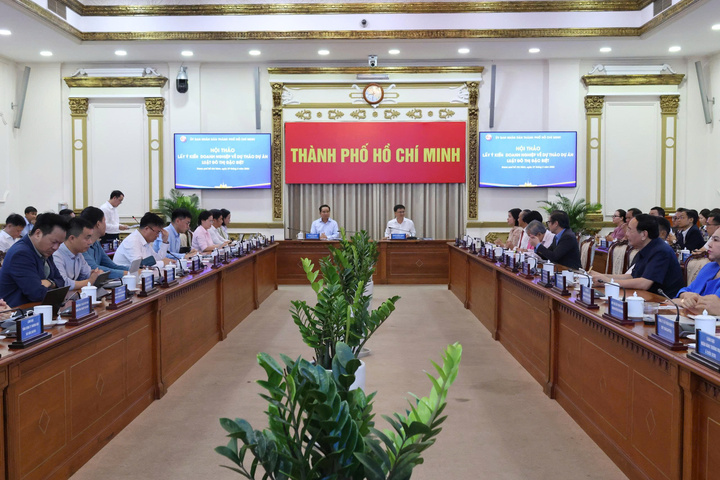
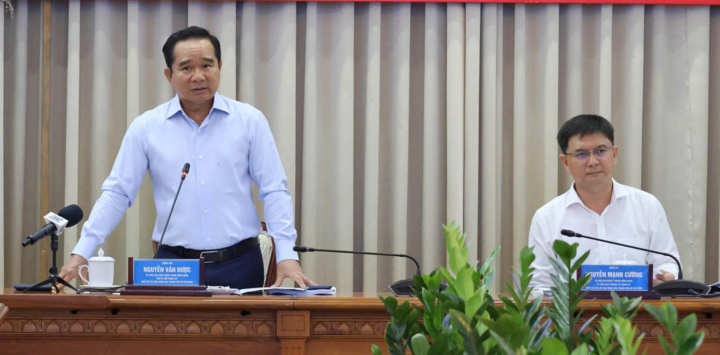
Speaking to businesses during the consultation session with domestic and international enterprises and economic groups regarding the Draft Special Urban Law on the morning of May 27, Nguyễn Văn Được, Chairman of the Ho Chi Minh City People’s Committee, stated that the drafting of this law represents a major opportunity for Ho Chi Minh City to create breakthroughs in development and move toward double-digit economic growth. He described this as an especially important period that opens opportunities for major future breakthroughs.
Opinions from the business community and industry associations are extremely important because they are key drivers of both the city’s and the nation’s economic development.
Ho Chi Minh City has a tradition of innovation, dynamism, and creativity, and maintained double-digit growth over five consecutive terms from 1991 to 2010. However, growth momentum has slowed during the past three terms, with signs of deceleration emerging.
Since 2025, the economy has begun recovering, especially in the first quarter of 2026, when GRDP growth reached 8.27%. Mr. Được stated that this achievement was significantly supported by the special mechanisms and policies previously approved for Ho Chi Minh City by the Central Government and the National Assembly, including Resolution 98 and Resolution 260 regarding pilot special mechanisms and policies.
“However, current special mechanisms still have certain limitations and have not yet created long-term confidence for the business community. The development of the Special Urban Law will create a more stable and sustainable legal foundation for the investment environment.
The Politburo has also issued Resolution 09 on the development of Ho Chi Minh City in the new era. Together with the Special Urban Law, Ho Chi Minh City will have tremendous opportunities to break through, develop rapidly and sustainably, and achieve double-digit growth targets,” the Chairman of the Ho Chi Minh City People’s Committee affirmed.
“No one taxes dreams,” Mr. Được said, encouraging businesses and industry associations to boldly contribute ideas, including proposals that go beyond current incentive frameworks, in order to build an outstanding institutional foundation capable of meeting growth targets and reaffirming Ho Chi Minh City’s role as a megacity and the nation’s leading economic center.
The article link on the oniline magazine VTCNEWS: https://vtcnews.vn/dau-tau-kinh-te-tp-hcm-khong-the-tiep-tuc-chay-nhanh-nhung-tren-duong-ray-cu-ar1020180.html