An article featuring Mr. Dinh Hong Ky, published in Thanh Niên newspaper on September 17, 2026.
This was the view expressed by Mr. Dinh Hong Ky, Vice Chairman of the Ho Chi Minh City Union of Business Associations (HUBA), at the Conference on Investment Connectivity and Development Cooperation between Ho Chi Minh City and provinces and cities in the Southeast and Mekong Delta regions, organized by the Ho Chi Minh City Investment and Trade Promotion Centre (ITPC) on the afternoon of September 17.
Businesses Need More Than Incentives to Make Investment Decisions
Speaking at the conference, Mr. Pham Quang Nhat, Director of ITPC, emphasized that regional connectivity must evolve from information sharing to the joint implementation of concrete projects, transforming the individual advantages of each locality into collective strength.
Specifically, Ho Chi Minh City will focus on connecting three value chains: high-tech industry and logistics; agriculture, fisheries, deep processing and exports; and clean energy and the circular economy.
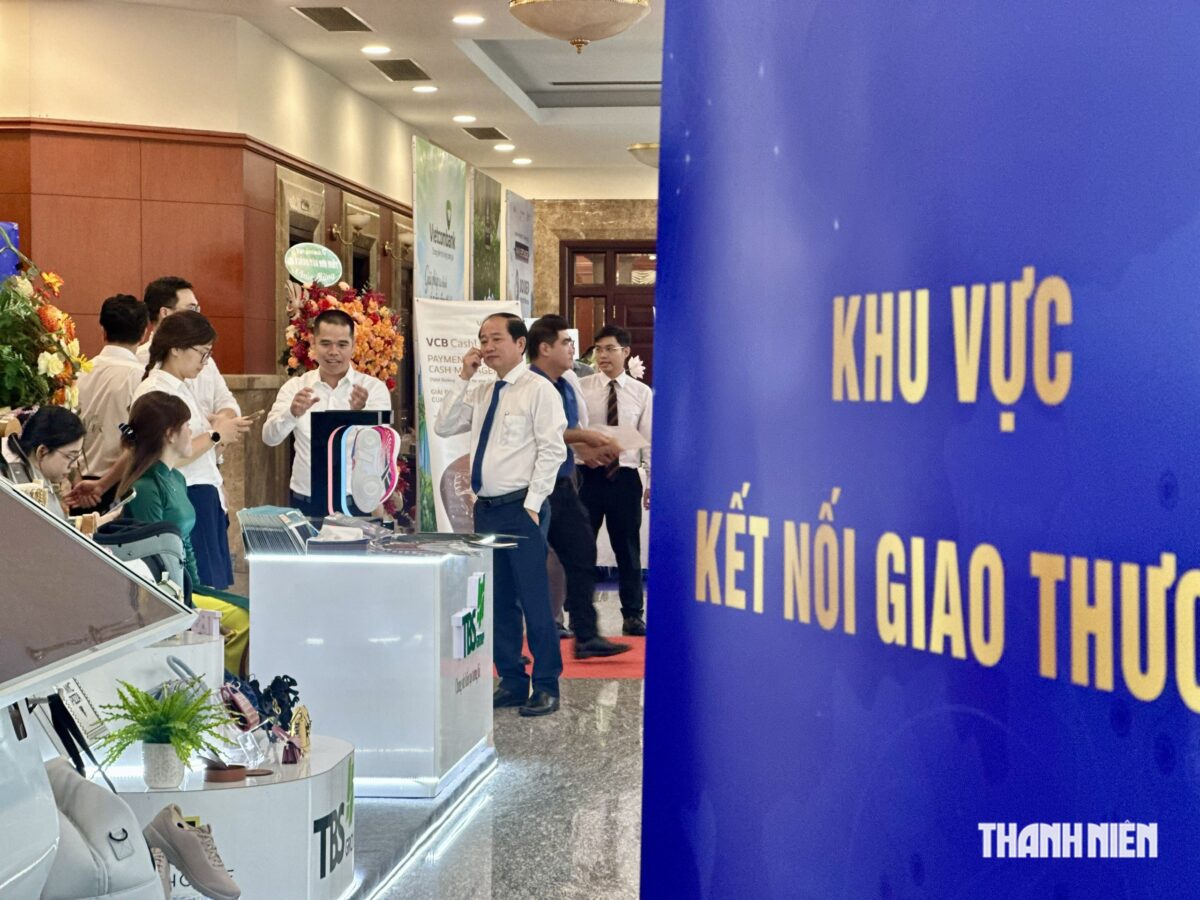
Investment promotion activities will also be standardized around value chains, with investment opportunities digitized and followed through to completion. The objective is to move beyond simply connecting stakeholders so they know one another, toward connecting them so they can work together.
“What truly drives a business to commit investment capital to a particular locality?” Mr. Ky asked.
He emphasized that the gap between “expressing interest” and “committing capital” increasingly depends less on individual incentives and more on the quality of the investment environment, the ability to connect value chains, and the implementation capacity of local authorities.

Today, businesses consider not only land prices, labor costs, and tax incentives, but also place growing importance on logistics, energy, human resources, supply chains, digital transformation, environmental requirements, and access to domestic and international markets.
What businesses fear most is not necessarily high costs, but uncertainty.
A project may be able to accommodate higher costs if the investor knows exactly how long administrative procedures will take, when infrastructure will be completed, which authority is responsible, and whether commitments will be implemented consistently.
Therefore, local authorities need to provide investors with certainty, transparency, and predictability.
For large-scale projects, businesses also need a single point of contact that assumes genuine responsibility throughout the entire process. This entity should not merely receive applications, but also coordinate relevant departments and agencies, monitor progress, and help resolve bottlenecks during project implementation.
From this perspective, Mr. Ky proposed shifting from general “lists of projects calling for investment” to portfolios of investment-ready opportunities, with specific information on locations, planning, land availability, infrastructure, electricity, water, logistics, administrative procedures, and implementation timelines.
Looking further ahead, localities could establish a shared regional investment information portal, enabling investors to see not only individual projects but also how those projects connect within broader value chains.
Meanwhile, Mr. Dang Hong Anh, Chairman of the Vietnam Young Entrepreneurs Association and Vice Chairman of Thanh Thanh Cong Group, stated that private enterprises should boldly enter emerging sectors such as digital infrastructure, data centers, semiconductors, green energy, and high-tech agriculture.
To unlock these capital flows, he recommended that local authorities allocate cleared land, ensure a stable electricity supply for technology projects, and introduce appropriate policies on taxation, land rental, and regulatory sandbox mechanisms.
He also called for stronger administrative reforms and the establishment of a genuinely effective one-stop mechanism for large-scale, high-tech, and green transformation projects.
“Time is one of the biggest costs for businesses. If administrative procedures take two to three years, investment opportunities and the ability to compete in the global market may be lost,” Mr. Hong Anh warned.
He further emphasized the need for funds supporting technology and green transformation, as well as long-term preferential credit. Large corporations should also play a central role in bringing small and medium-sized enterprises into their supply chains.
Ho Chi Minh City Commits to Turning Regional Connectivity into Action
In his closing remarks, Mr. Bui Minh Thanh, Member of the Ho Chi Minh City Party Committee and Vice Chairman of the Ho Chi Minh City People’s Committee, shared the view that each locality possesses its own advantages.
When these advantages are connected through infrastructure, markets, capital, science and technology, human resources, and supply chains, they can create a larger economic space with greater competitiveness and wider economic impact.

The Southeast region has strengths in industry, urban development, logistics, and services. The Mekong Delta has advantages in agriculture, fisheries, and energy, while Ho Chi Minh City excels in markets, finance, science and technology, innovation, human resources, and international networks.
The combination of these strengths provides a foundation for creating new development opportunities.
However, Mr. Thanh acknowledged that regional cooperation in recent years has remained largely event-oriented and has yet to establish specialized, long-term value chains.
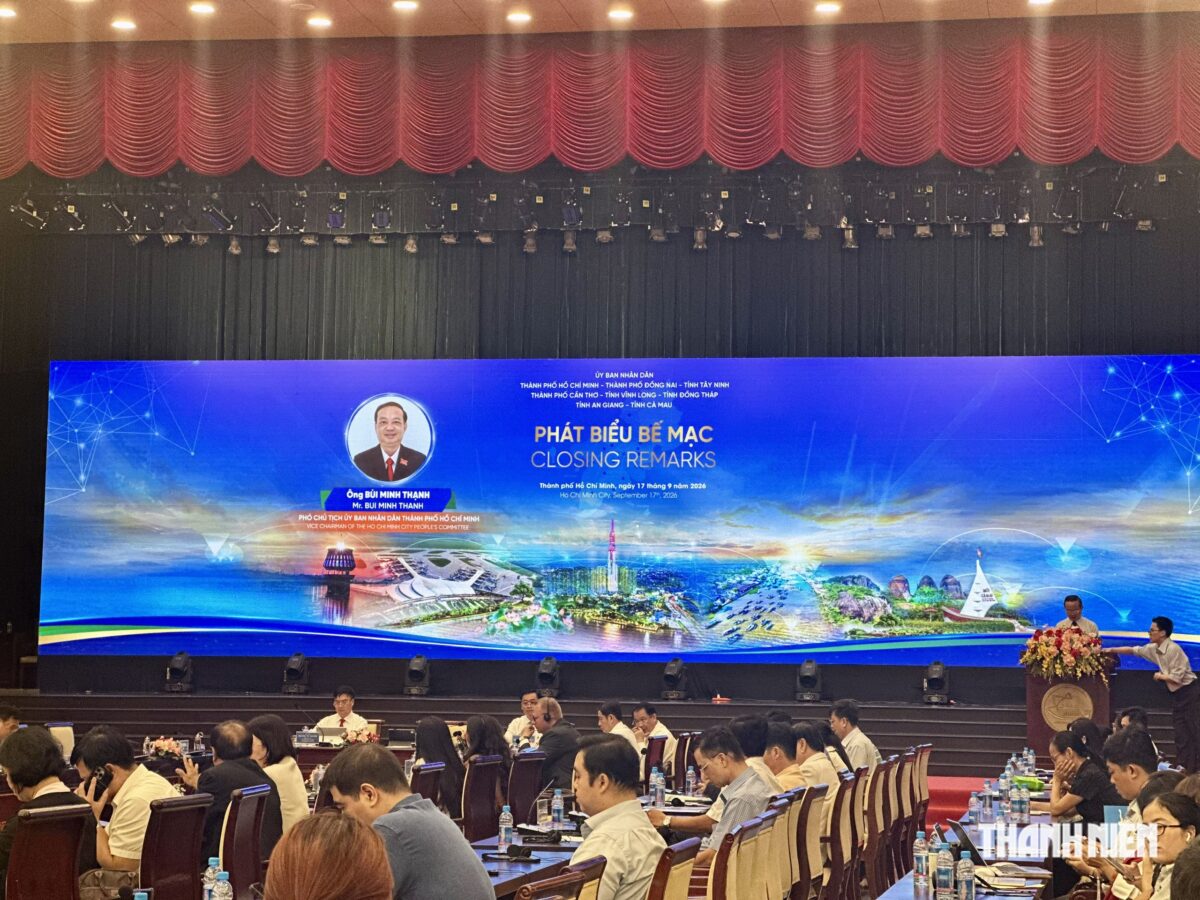
Therefore, it is necessary to shift from cooperation based on administrative boundaries to cooperation based on shared development spaces; from promoting individual projects to building value chains; from competing to attract resources to jointly expanding them; and from making commitments to delivering actions and measurable results.
Following the conference, Ho Chi Minh City leaders requested that localities review and select programs, projects, and sectors with strong interregional characteristics and the potential to drive economic growth, with the aim of establishing a portfolio of priority cooperation initiatives for the 2026–2030 period.
Key priorities include improving interregional transportation and logistics infrastructure, accelerating the development of ring roads and expressways connecting Ho Chi Minh City with the Southeast and Mekong Delta regions, and strengthening seaport and inland waterway systems.
“The city will promote the development of specialized industry value chains and ecosystems, leveraging Ho Chi Minh City’s strengths in finance, science and technology, and human resource training to help products from other localities participate more deeply in global value chains,” Mr. Thanh stated.
He also emphasized the need to reform governance mechanisms, moving from signing cooperation agreements to managing cooperation through measurable outcomes and concrete deliverables.
This includes assigning clear responsibilities to designated lead agencies, maintaining regular coordination mechanisms, ensuring data transparency, and expanding the participation of private enterprises and international investors.
“Ultimately, all regional planning and cooperation mechanisms must be measured by the success of businesses and the benefits delivered to the people,” Mr. Thanh emphasized.
Original article published in Thanh Niên newspaper: https://thanhnien.vn/khoang-cach-tu-quan-tam-den-xuong-tien-it-phu-thuoc-nhung-uu-dai-don-le-185260917184120738.htm