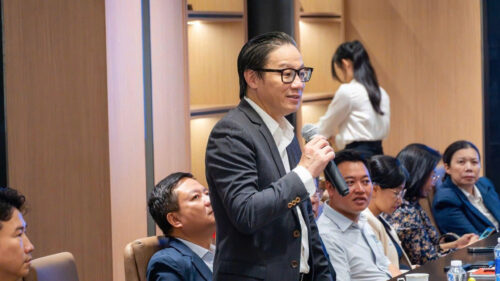
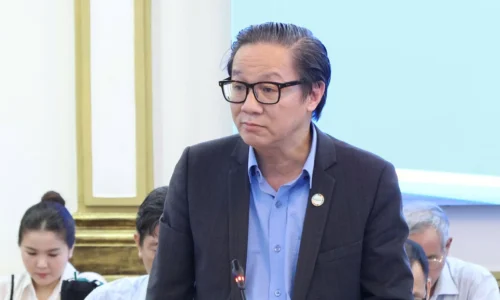
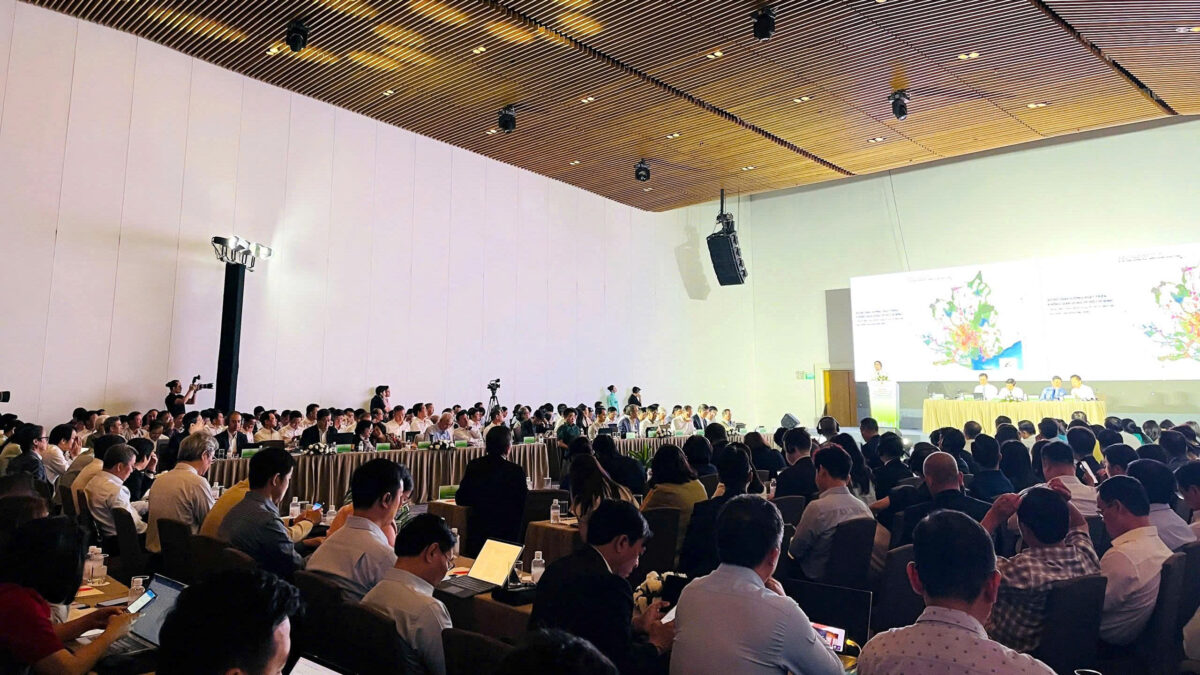
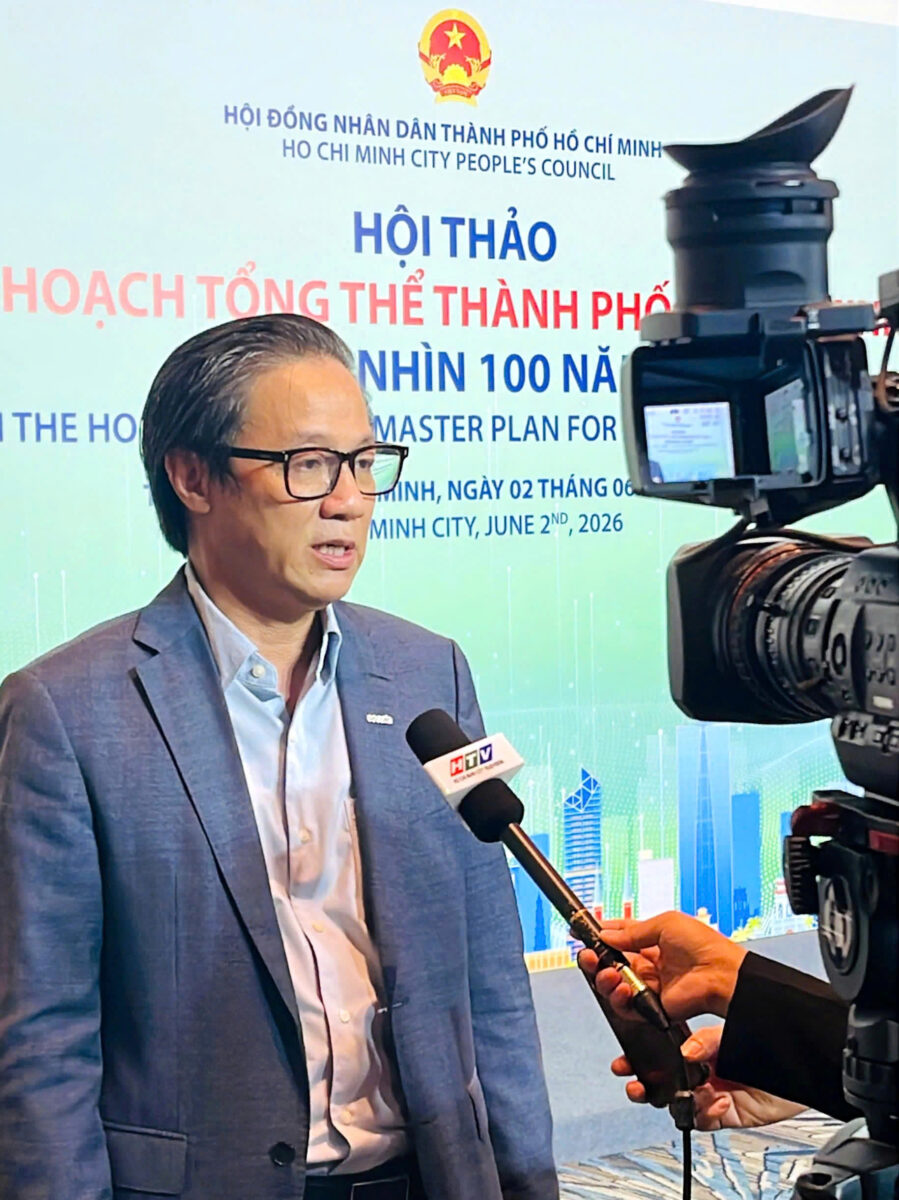
Mr. Dinh Hong Ky delivered a speech at the seminar “Master Planning for Ho Chi Minh City with a 100-Year Vision” on June 2, 2026.
On June 2, 2026, at the seminar “Master Planning for Ho Chi Minh City with a 100-Year Vision,” Đinh Hồng Kỳ — Chairman of the Ho Chi Minh City Green Building Association — delivered an important speech presenting a number of strategic proposals aimed at shaping a sustainable future for Ho Chi Minh City in the 21st century.
In his presentation, Mr. Đinh Hồng Kỳ emphasized that the competitiveness of future cities will not be determined solely by economic scale or infrastructure systems, but also by their ability to regenerate resources, reduce carbon emissions, and improve residents’ quality of life.
He proposed that Ho Chi Minh City should establish a vision of becoming the circular economy hub of Vietnam and Southeast Asia through the development of regional-scale recycling and resource recovery centers, eco-industrial parks, water reuse systems, and circular waste management models.
In addition, green transformation should be considered a core component of the city’s development structure, with low-carbon development corridors connected to seaports, airports, logistics centers, industrial zones, and innovation hubs. He also stated that Ho Chi Minh City has the potential to become a regional green finance and carbon credit trading center, attracting international investment capital for the green transition process.
Another important issue he highlighted was investment in green infrastructure. According to him, air quality, green space, flood resilience, carbon absorption capacity, and biodiversity will become key indicators reflecting the competitiveness of future cities.
Mr. Đinh Hồng Kỳ affirmed that, with a long-term vision, Ho Chi Minh City should not only become a regional financial and logistics center, but also serve as a model for green urban development, circular economy practices, and sustainable development in Asia during the 21st century.
Full Speech by Mr. Đinh Hồng Kỳ
“Distinguished Chairpersons, it is my great honor today to speak at the seminar on the Master Planning for Ho Chi Minh City with a 100-Year Vision in my capacity as Chairman of the Ho Chi Minh City Green Building Association.
Ladies and gentlemen, if the 20th century was a competition for land, labor, and infrastructure, then the 21st century will be a competition in resource regeneration, carbon reduction, and quality of life. A city may be very large, but not necessarily livable. A city may grow rapidly, but not necessarily sustainably.
Therefore, in my opinion, the greatest objective of Ho Chi Minh City’s 100-year master plan should not only be to become a regional financial or logistics center, but also to become a model green city, a circular city, and a city with strong adaptability to future challenges.
In a megacity of more than 14 million people, an enormous volume of household waste, industrial waste, construction waste, wastewater, and other forms of secondary resources is generated every day. If these are viewed as burdens, we will continue investing increasingly larger amounts in treatment and landfilling. However, if they are viewed as resources for the circular economy, we can create new industries, new value chains, and new investment opportunities.
Therefore, I propose that Ho Chi Minh City’s master plan clearly define the goal of transforming the city into the circular economy hub of Vietnam and Southeast Asia. This should include planning regional-scale recycling and resource recovery centers, eco-industrial parks, water treatment and reuse centers, and recycling ecosystems for household waste, plastics, electronic waste, industrial waste, and construction solid waste.
In addition, I believe that green transformation should be regarded as a structural and core component of the city’s spatial development framework. We often speak about economic corridors, logistics corridors, or industrial corridors. However, in the future, Ho Chi Minh City should establish low-carbon development corridors linked to seaports, airports, logistics centers, industrial zones, and innovation centers. These will become priority spaces for renewable energy, green technology, clean transportation, low-carbon economic activities, and smart manufacturing models.
In particular, with the ambition of becoming an international financial center, Ho Chi Minh City can go even further by becoming a regional green finance center and carbon credit trading hub. This would not only attract international capital but also create resources to support the green transformation of businesses and the city’s economy.
Another issue I hope will receive attention in the planning process is green infrastructure. In the future, a city’s competitiveness will not only be measured by the number of skyscrapers, the length of highways, or GDP scale, but also by air quality, green space, flood resilience, carbon absorption capacity, biodiversity, and the happiness of its citizens. Investing in the environment is not a cost; it is an investment in long-term competitiveness.
Ladies and gentlemen, I hope Ho Chi Minh City will not only be planned to become a larger city, but a greener city. A city that not only consumes resources, but regenerates them; not only pursues economic growth, but also reduces carbon emissions; not only attracts investment, but also improves people’s quality of life.
I firmly believe that, with a new vision, new development space, and the city’s determination for innovation, Ho Chi Minh City can become a financial center of ASEAN, a logistics hub of Southeast Asia, and at the same time a model of green urban development, circular economy, and sustainable development in Asia in the 21st century.
Thank you very much.”