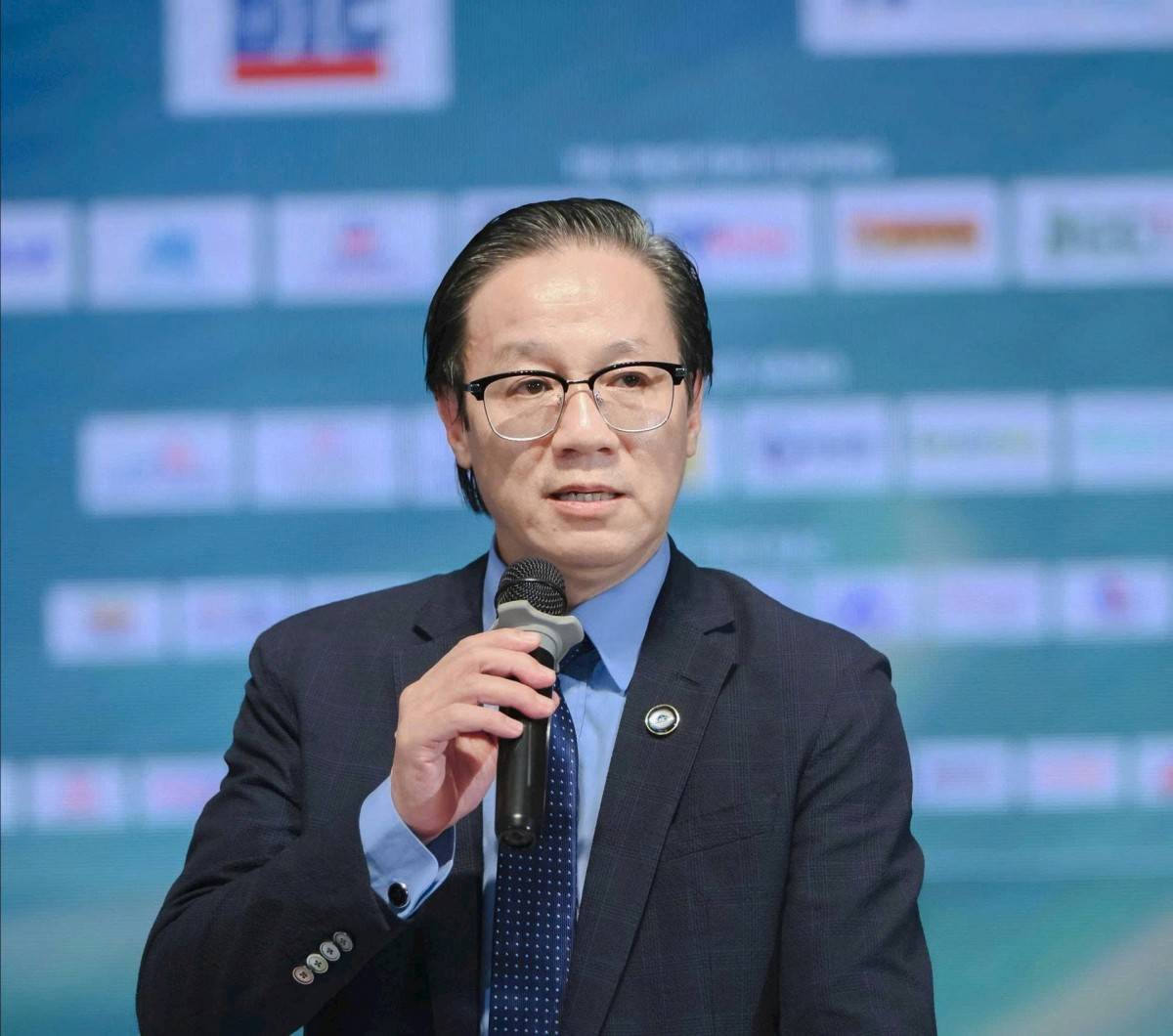
Mr. Dinh Hong Ky gave an interview published in the online magazine Doanh Nghiệp Hội Nhập on May 27, 2026.
From the perspective of the business community, Dr. Đinh Hồng Kỳ believes that if the Special Urban Law can establish genuine autonomy, a fast decision-making mechanism, a data-driven digital administration, and an institutional environment open enough for innovation, Ho Chi Minh City will have the opportunity to move onto a “new development track” for many decades to come.
At the consultation workshop on the Draft Special Urban Law with the business community, Đinh Hồng Kỳ – Chairman of Secoin Company, Chairman of the Ho Chi Minh City Construction and Building Materials Association (SACA), Chairman of the Ho Chi Minh City Green Business Association (HGBA), and Vice Chairman of the Ho Chi Minh City Business Association (HUBA) – proposed several notable recommendations from the business perspective, emphasizing the need for institutional reform so that Ho Chi Minh City can compete with major metropolitan cities in the region.
According to Dr. Đinh Hồng Kỳ, the core issue of the Special Urban Law is not how many additional special mechanisms Ho Chi Minh City may receive, but whether the city possesses sufficient institutional capacity to enter global competition.
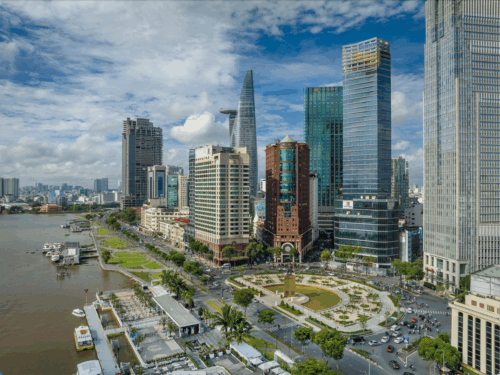
He observed that Ho Chi Minh City is currently facing a major paradox: while its urban scale has already reached the level of a “megacity,” its governance model still heavily reflects the mindset of a traditional administrative city.
“After expanding its regional development space, Ho Chi Minh City is gradually becoming a megacity of nearly 14 million people, contributing around one-fourth of the nation’s GDP. However, if infrastructure, governance, and institutions are not ‘super-connected,’ large scale may become a burden rather than an advantage,” Dr. Đinh Hồng Kỳ analyzed.
From “Having Authority” to “Daring to Decide and Act”
One of the aspects highly appreciated by the business community in the draft law is the strong decentralization mindset and the principle of prioritizing the application of the Special Urban Law when legal conflicts arise.
According to Dr. Đinh Hồng Kỳ, this is an appropriate direction because a megacity cannot develop if every decision continues to operate under a “request – wait – seek guidance” mechanism. However, he stressed that the bigger challenge is not merely granting authority, but creating a sufficiently strong implementation mechanism.
“The key question is whether authority comes together with accountability in execution, and whether the system creates enough motivation for people to dare to make decisions,” he emphasized.
Drawing from many years of practical experience within the business community, Dr. Đinh Hồng Kỳ stated that Ho Chi Minh City does not lack investment resources, major ideas, or social capital. The bottleneck lies in the speed of transforming decisions into action.
“Many projects have been delayed for years not because of a lack of capital, but because it is unclear who has the authority to decide, how long the decision process takes, and who bears responsibility if delays occur,” he noted. Therefore, he proposed that the Special Urban Law should shift strongly from a “process control” mindset toward “results-based governance.”
Building a Genuine Digital Administration
One of the most notable recommendations concerns administrative reform based on data and technology. Dr. Đinh Hồng Kỳ argued that Ho Chi Minh City should be empowered to build a synchronized digital administration instead of maintaining a fragmented management model.
He proposed that the city should focus on developing:
- A genuine digital administration;
- A shared data system;
- A single focal point for administrative procedures;
- A responsibility-tracking mechanism tied to processing deadlines.
The business leader appreciated that the draft law initially grants the city greater authority to adjust administrative procedures in order to meet reform and digital transformation requirements. However, according to him, the most significant change is not simply reducing a few forms or paperwork procedures.
“Real reform means shifting from pre-inspection to post-inspection based on data and compliance levels,” he stressed.
Accordingly, compliant businesses should face fewer inspections; data that has already been submitted should not need to be resubmitted; and overdue administrative procedures should either be automatically approved or require responsible agencies to provide explanations.
Ho Chi Minh City Needs a Regional Development Mindset Rather Than an Administrative Boundary Mindset
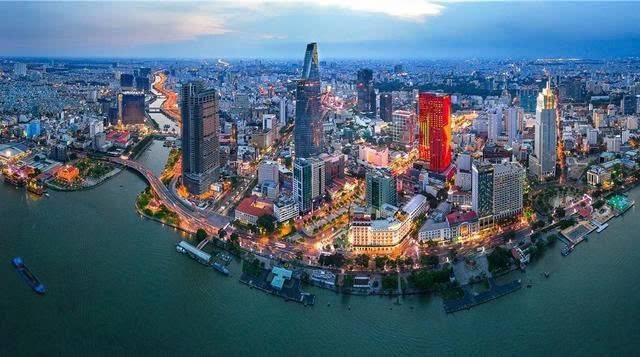
Another important point raised by Dr. Đinh Hồng Kỳ is the need to view Ho Chi Minh City as part of a regional development ecosystem rather than as an isolated administrative unit.
According to him, many strategic issues today — such as metro systems, logistics, financial centers, green transition, innovation, digital transformation, flood prevention, and maritime economic development — have already extended beyond the city’s own boundaries.
“If there is no sufficiently strong regional coordination mechanism, investment will continue to be fragmented, infrastructure will remain disconnected, and high logistics costs will persist,” he warned.
He also expressed support for the draft law’s orientation toward developing science and technology urban areas, integrated logistics zones, the nighttime economy, cultural industries, and innovation ecosystems. However, to ensure that these directions do not remain merely objectives on paper, he argued that flexible policy experimentation mechanisms are essential.
Proposal for a Regulatory Sandbox Mechanism for Innovation
In addition, one of Dr. Đinh Hồng Kỳ’s most prominent proposals is the inclusion of a separate chapter or section dedicated to controlled policy experimentation mechanisms (Regulatory Sandbox). He proposed five specific groups of mechanisms:
First, geographically based sandboxes, selecting strategic areas such as Thủ Thiêm, Cần Giờ, Cái Mép Hạ, or typical TOD models for pilot implementation.
Second, time-limited sandboxes for emerging industries, applicable to fintech, digital assets, autonomous vehicles, digital healthcare, or paperless logistics.
Third, controlled legal exemption mechanisms, allowing businesses to be exempt from certain legal procedures within defined limits in order to test new models.
Fourth, mechanisms ensuring that failed experiments are not criminalized.
Fifth, real-time data evaluation mechanisms, enabling Ho Chi Minh City to utilize digital data, urban governance dashboards, and artificial intelligence to analyze risks and continuously assess policy impacts.
Concluding his remarks, Dr. Đinh Hồng Kỳ reiterated that if the Special Urban Law merely adds a few preferential mechanisms, Ho Chi Minh City may continue growing but only along the “old track.”
On the contrary, if the law can establish genuine autonomy, rapid decision-making mechanisms, a data-driven digital administration, and an institutional environment open enough for innovation, Ho Chi Minh City will have the opportunity to move onto a “new development track” for decades to come.
According to him, the Special Urban Law is not merely a matter concerning Ho Chi Minh City alone, but could also become a new institutional reform model for Vietnam in its next stage of development.
The article link on the online magazine Doanh Nghiep Hoi Nhap: https://doanhnghiephoinhap.vn/tp-ho-chi-minh-can-duong-ray-phat-trien-moi-137557.html