Article by Đinh Hồng Kỳ, published in Doanh Nhân Sài Gòn on February 23, 2026
I received a call from a wood-processing company in Bình Dương (former province). The CEO told me that a shipment bound for the United States had completed production and was scheduled for export after the Lunar New Year holiday (Year of the Horse), but the U.S. partner requested a “temporary hold” to recalculate costs due to the new additional U.S. import tariff, which had increased from 10% to 15%.
With profit margins of only 5–7%, that tax increase is enough to wipe out the entire profit of the shipment. “If they agree to share half of the tax, we can still operate. Otherwise, we will be forced to cut production,” he said. This story is not unique to one company—it reflects the prevailing sentiment following a series of new tariff measures by the administration of President Donald Trump.
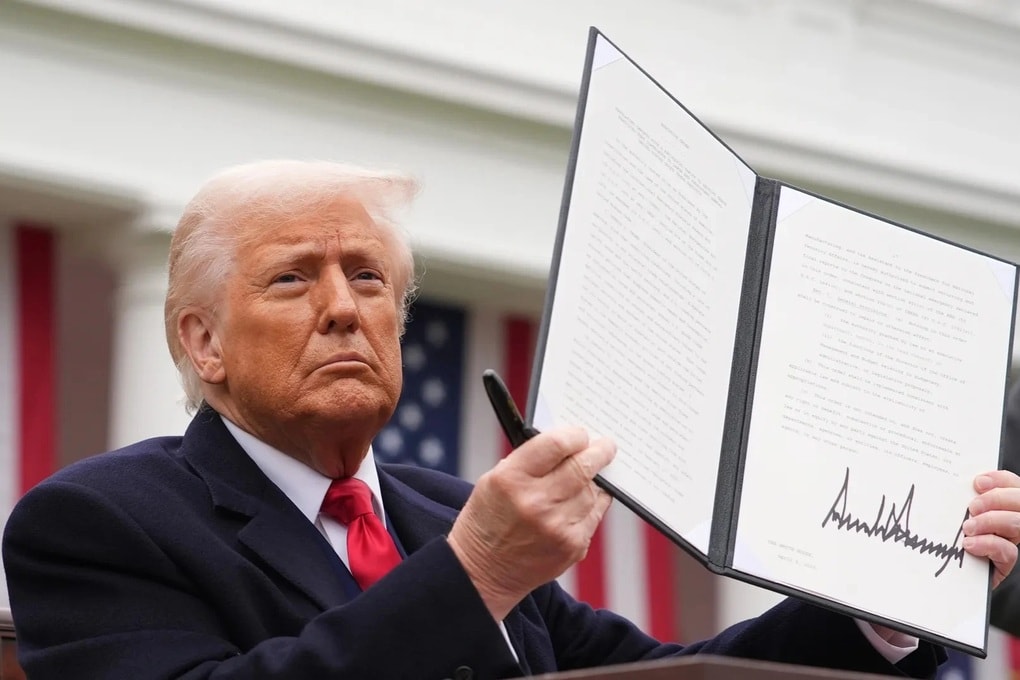
The U.S. decision to raise additional import tariffs from 10% to 15% and expand their scope comes amid a tightening of the “America First” trade policy. These tariffs do not target Vietnam specifically, but Vietnam is among the countries most visibly affected due to its large trade surplus with the United States. When the additional tariff rises by five percentage points, the issue is no longer just about numbers—it alters market expectations: U.S. companies may shift orders elsewhere, squeeze prices, or demand cost-sharing of the tariff burden.
The first impact: pressure on exports.
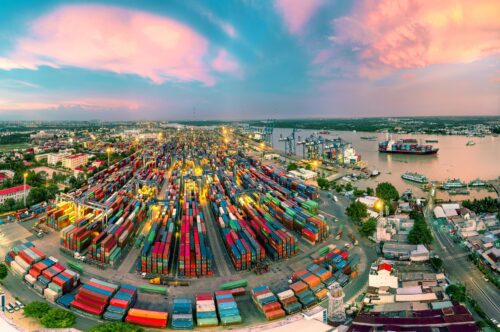
The United States is currently Vietnam’s largest export market, accounting for around 30% of total export turnover. Price-sensitive industries such as textiles, footwear, wood products, and seafood will be directly affected. For electronics and equipment—sectors heavily dependent on imported components—the risk of origin investigations and higher tariff rates becomes even more pronounced. With already thin margins, even a small tariff change can erode Vietnam’s competitiveness relative to countries like Mexico or India.
The second impact: pressure on the FDI- and processing-based growth model.
If goods are suspected of “transshipment” or contain low levels of domestic value-added, tariff risks increase significantly. This highlights a structural weakness of Vietnam’s economy: low localization rates in many industries and limited participation of domestic firms in global value chains. As the U.S. tightens tariffs based on origin and trade deficits, Vietnam can no longer rely solely on cheap labor advantages. It must raise domestic value-added content, ensure supply chain transparency, and comply with higher standards.
The third impact: market sentiment and capital flows.
Tariff uncertainty often leads to exchange-rate volatility, higher insurance costs, and rising interest rates. International investors tend to become more cautious toward export-dependent economies. If exporting firms struggle and profits decline, the effects will ripple through the stock market and government revenues, potentially spilling over into domestic consumption and investment.
A long-term perspective: a necessary wake-up call.
From a longer-term viewpoint, this may also be a necessary “shock.” History shows that each external shock has pushed Vietnam to restructure more decisively. When Resolution 10 in 1988 granted autonomy to farmers, agriculture took off. When Vietnam joined the WTO, enterprises were forced to upgrade governance standards. This time, tariff pressure could become a catalyst for Vietnam to shift from a “low-cost manufacturing base” to a “high-value production hub.”
This transition requires three strategic shifts.
First, proactively rebalance trade.
Vietnam should increase imports of technology products, energy, and financial services from the United States to reduce excessive trade surpluses and create a more sustainable balance. This is not merely a trade concession, but an opportunity to access advanced technologies and upgrade the economy.
Second, raise localization rates and develop domestic enterprises.
If 70–80% of export turnover continues to belong to the FDI sector, tariff risks will always loom. Industrial policy must focus on supporting industries, logistics, and core technologies so that Vietnamese enterprises can participate more deeply in supply chains.
Third, diversify export markets.
Agreements such as the EVFTA, CPTPP, and RCEP open up many potential markets. Overdependence on a single market means every policy change becomes a shock. Diversification not only reduces risk, but also strengthens negotiating leverage.
In today’s BANI world—brittle, anxious, nonlinear, and incomprehensible—tariffs are no longer purely economic instruments but geopolitical levers. Vietnam cannot control policies in Washington, but it can control its own internal structure. The real question is not how many percentage points tariffs increase, but whether Vietnam is ready to upgrade its growth model.
The entrepreneur who called me this morning ended our conversation with a deeply reflective remark: “We just hope for a long-term strategy so we know which direction to invest in.” That is likely the shared aspiration of the business community today. And it is precisely in times of greatest uncertainty that strategic vision and institutional reform will determine whether tariff shocks become obstacles—or catalysts—for a new development cycle in Vietnam.
Author’s credentials:
Chairman of Secoin;
Chairman of the Ho Chi Minh City Green Business Association;
Chairman of the Ho Chi Minh City Construction and Building Materials Association;
Vice Chairman of HUBA.
Original article link (Vietnamese):
https://doanhnhansaigon.vn/thue-doi-ung-cua-my-va-giai-phap-cho-doanh-nghiep-viet-333229.html