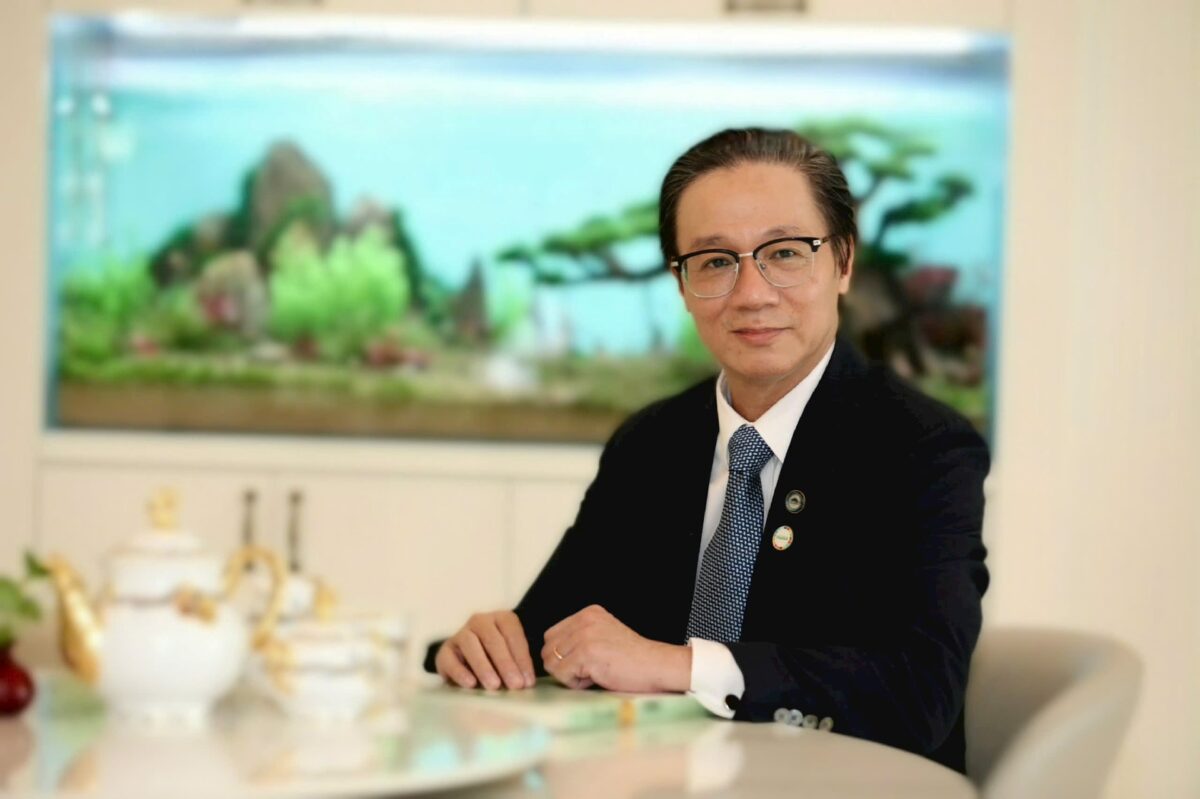
By Mr. Đinh Hồng Kỳ Published in Hanoi Moi on March 2, 2026
Hanoi is the heart of the nation. A healthy heart circulates energy throughout the entire body. For Hanoi, one of its most vital sources of energy is innovation.
The capital has history, intellect, and policy-making authority. But innovation does not automatically emerge from the past. It only takes shape when institutions are courageous enough, when trust is strong, and when risk is recognized as an inevitable part of progress.
Every innovative city in the world—from Singapore to Tel Aviv—began with a strategic choice: prioritizing experimentation over absolute safety.
Hanoi holds a unique advantage as the concentration point of central government agencies and major academic institutions. The city has the capacity to pilot new mechanisms faster than any other locality. However, if the system remains overly focused on pre-approval, if fear of responsibility overwhelms the desire for reform, innovation will remain confined to conference rooms.
A thriving innovation ecosystem requires three pillars: legal sandboxes for new technologies; investment funds with government “seed capital”; and research procurement mechanisms tied to concrete urban challenges. Without institutional reform, there can be no breakthrough in innovation.
The establishment of the Hanoi Innovation Center is a positive step. Yet its true value lies not in infrastructure, but in its ability to connect.
Hanoi possesses the largest pool of intellectual resources in the country. Nevertheless, the gap between research and the market persists. Many scientific projects fail to find business partners, while many enterprises must look abroad for solutions.
A truly effective center must act as a coordinating brain among four key stakeholders: the State, academia, businesses, and investors. Without creating a flow between knowledge and the market, opportunities will slip away rapidly.
Hanoi faces challenges that are uniquely its own—and precisely these challenges represent a goldmine for innovation.
Traffic congestion, air pollution, complex urban governance, and overloaded infrastructure. If innovation cannot address these issues, it loses its practical meaning.
Hanoi can position itself as a capital of sustainable urban solutions: intelligent transportation technologies, digital urban governance, advanced waste and wastewater treatment, green building materials, and AI applications in public administration. Innovation is the ability to turn challenges into competitive advantages.
Entrepreneurship is inherently tied to risk. And where risk is highest, capital tends to be most hesitant. In many countries, governments participate as co-investors—not to interfere, but to share risk. When the State places trust in the future, the private sector becomes bolder.
Hanoi needs an innovation investment fund that operates according to market principles, with transparency and an independent governing council. Not to replace businesses, but to give ideas a chance to be tested. Trust is the most powerful catalyst in an innovation ecosystem.
No innovative city encourages safety over critical thinking in education.
Hanoi has a strong tradition of learning. But the new era demands the ability to question, interdisciplinary thinking, and financial and entrepreneurial literacy. Open creative spaces for young people and community laboratories must be regarded as essential infrastructure.
A creative city does not only produce technology—it nurtures the courage to be different.
History shows that many cities once experienced rapid growth, only to decline later due to a lack of long-term foundations. When talent leaves, when businesses relocate elsewhere, growth becomes nothing more than statistics.
Hanoi cannot rely solely on expanding in scale. The core challenge is upgrading the quality of institutions and the living environment. Administrative procedures must be swift and transparent. An innovative project cannot afford to spend months just seeking permission to run a pilot.
The speed of reform will determine the speed of innovation.
A healthy heart does not merely beat steadily—it transmits energy throughout the body.
If Hanoi is to become the national center of innovation, it must be a place that inspires trust: trust among young people that they are given opportunities; trust among businesses that they are protected when experimenting; trust among investors that the “rules of the game” are transparent and stable.
Innovation is not a short-term campaign. It is a strategic choice for the capital city in the 21st century.
With open institutions, seamless connections between knowledge and the market, shared risks, and a culture of innovation nurtured from classrooms to enterprises, Hanoi will not merely be an administrative center.
Hanoi will be a place where great ideas are born.
And when the heart beats strongly, the entire nation will move forward with strength.
Link to the article on Hanoi Moi newspaper: https://hanoimoi.vn/ha-noi-trai-tim-doi-moi-sang-tao-quoc-gia-735655.html