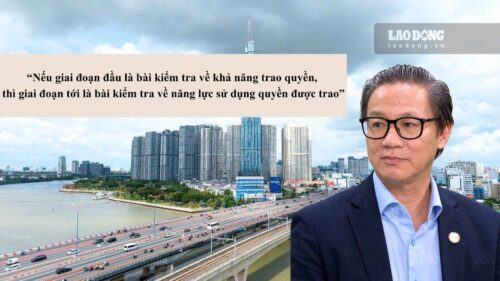
Mr. Dinh Hong Ky in an interview with Lao Dong Newspaper, published on October 27, 2026.
New development opportunities, coupled with the momentum generated by the Autumn Economic Forum (AEF) 2026, present significant opportunities for Ho Chi Minh City businesses to enhance their capabilities and strengthen global technology cooperation.
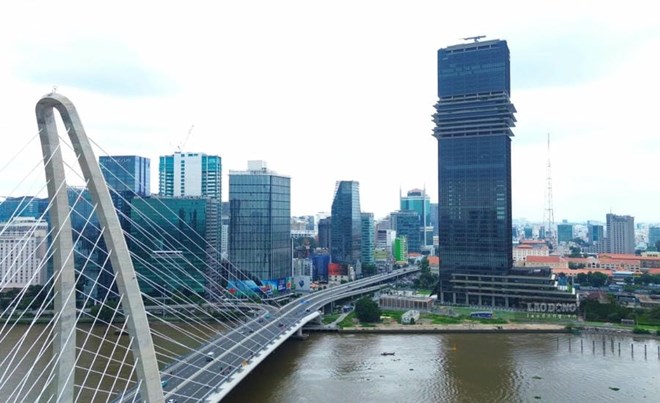
In an interview with Lao Dong Newspaper, Mr. Dinh Hong Ky, Vice Chairman of the Ho Chi Minh City Union of Business Associations (HUBA), emphasized the need for local businesses to upgrade their capabilities to establish a stronger position and capture greater value within international supply chains.
Turning Business Connections into Concrete Orders
In your opinion, what opportunities does AEF 2026 offer to the business community in Ho Chi Minh City?
Following its merger with Binh Duong and Ba Ria–Vung Tau, Ho Chi Minh City now brings together strengths in finance, processing and manufacturing industries, and the Cai Mep–Thi Vai deep-water port system, creating favorable conditions for developing integrated and interconnected value chains.
From a business perspective, I see three major opportunities arising from AEF 2026: direct access to investment decision-makers, participation in policy dialogues, and early insights into shifts in capital flows, technology, and global supply chains.
However, attracting major corporations is only the first step. Real success should be measured by the number of local businesses participating in supply chains, the technologies transferred, and the added value retained locally. The forum will only deliver meaningful results when business meetings translate into concrete partnerships and orders.
What changes and preparations are necessary for businesses to become partners in co-creating value with international corporations?
Transformation must begin with a change in mindset. Many businesses currently participate in supply chains primarily through contract manufacturing or the provision of low-value-added products. While this model generates employment and expands production, it also makes businesses vulnerable to replacement when costs rise or supply chains relocate.
Three fundamental transformations are required: shifting from order-based manufacturing to solution provision; from selling products to offering design, engineering, and quality management capabilities; and from competing on price to competing on reliability, technology, and sustainable development.
In the building materials industry, businesses can collaborate with partners to research new materials, conduct life-cycle assessments, and reduce carbon emissions. In the mechanical engineering industry, companies can move beyond manufacturing individual components to supplying integrated assemblies or complete engineering solutions.
However, becoming a co-creator of value remains an aspiration, as many small businesses have yet to enter international supply chains. Policies should prioritize enterprises with the potential to upgrade their capabilities while supporting smaller businesses in joining supply chains through production linkages.
The gap remains substantial. Nationwide, only around 500 supporting-industry enterprises currently have sufficient capabilities to serve as Tier 1 or Tier 2 suppliers, while the target is to have 10,000 enterprises participating in foreign direct investment (FDI) supply chains by 2030.
Ultimately, moving up the value chain means improving the quality of employment. Achieving this requires businesses, trade unions, and educational institutions to work together to reskill and upskill workers starting now.
When attending CEO 500 – TEA CONNECT as part of AEF 2026, businesses should come prepared with three essential elements: a company capability profile containing verifiable information on technology, production capacity, and delivery capabilities; data on energy consumption, emissions, and international standards achieved; and a specific cooperation proposal.
International corporations are not simply looking for low-cost suppliers. They are seeking partners who can help them reduce risks.
The goal is not for Vietnamese businesses to do everything, but to master a high-value, technology-driven segment of the value chain that is difficult to replace.
Moving from Green Commitments to Data-Driven Sustainability
How would you assess the current level of adaptation among Ho Chi Minh City businesses to ESG standards?
The green transition is rapidly evolving from a voluntary choice into a competitive requirement. Businesses can be divided into three groups.
The first group faces direct regulatory obligations, including facilities required to conduct greenhouse gas inventories and enterprises exporting products to the European Union that fall within the scope of the Carbon Border Adjustment Mechanism (CBAM).
The second group faces pressure from international customers. Even when regulations do not explicitly require compliance, these businesses must still provide emissions data and information on raw material origins to maintain their positions in supply chains.
The third group consists of small and medium-sized enterprises that lack sufficient financial resources, personnel, and data to implement ESG practices systematically.
The challenge lies not only in costs but also in the lack of consistency in data and standards. Different customers require different sets of information, increasing compliance costs. Businesses cannot manage what they have not measured.
I propose that Ho Chi Minh City promote the development of an emissions factor database suited to domestic production conditions, standardize industry-specific carbon data, and develop shared services for greenhouse gas inventories, life-cycle assessments, and certification.
Verifiable emissions reductions should also be linked to preferential green financing.
We need to move from sustainability slogans to data-driven sustainability.
Establishing a Meaningful Position and Capturing Real Value in Global Value Chains
In your opinion, what activities should HUBA prioritize to help its members connect with supply chains and build collective strength?
The role of business associations must evolve. They cannot limit themselves to organizing conferences, seminars, or reporting business difficulties. Instead, they must become platforms that connect resources.
In my personal view, HUBA should prioritize five key areas of action.
First, develop a digital supplier capability map of its members, clearly presenting their technologies, production capacities, and quality standards so that international corporations can identify suitable partners.
Second, facilitate supply chain connections based on a model of “one FDI corporation, multiple domestic suppliers,” driven by actual procurement needs.
Third, establish shared support programs for digital transformation, greenhouse gas inventories, international certifications, and access to green finance, thereby reducing costs for smaller enterprises.
Fourth, strengthen industry clusters and regional linkages while encouraging leading domestic enterprises to take the lead in developing supply chains. Expanding into global markets should not simply mean joining FDI-led supply chains, but also building supply chains led by Vietnamese businesses.
Fifth, consolidate business challenges into specific policy recommendations, with clearly designated responsible authorities and mechanisms for monitoring implementation results.
Thank you for sharing your insights!
Newspaper Article (PDF): Doanh nghiệp TPHCM tìm vị thế trong chuỗi giá trị toàn cầu.pdf
Original Article: https://laodong.vn/kinh-doanh/doanh-nghiep-tphcm-tim-vi-the-trong-chuoi-gia-tri-toan-cau-1789707.ldo