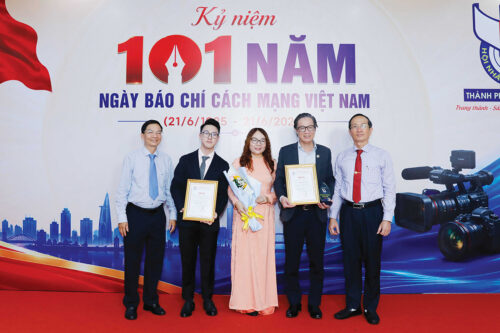
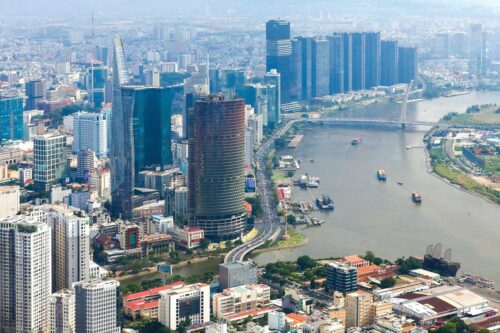
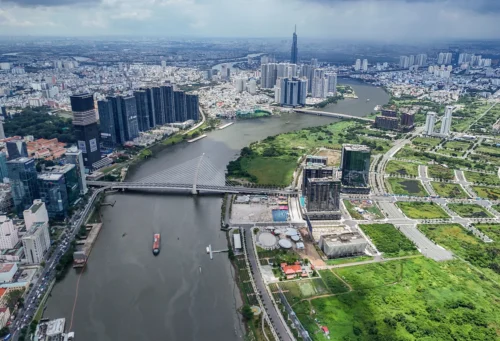
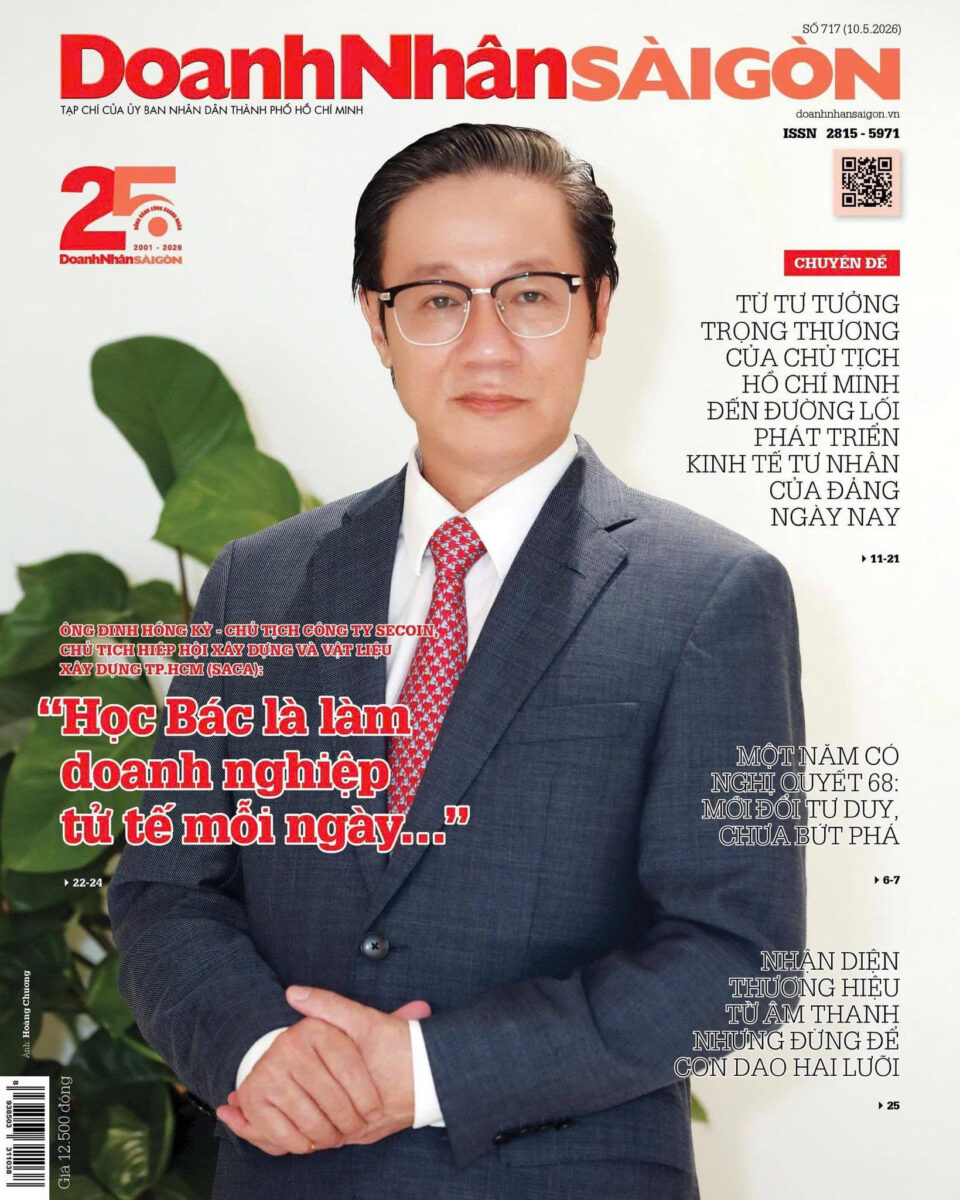
Mr. Dinh Hong Ky’s Interview Published in Doanh Nhan Sai Gon Newspaper on May 13, 2026
“The private economic sector is now being placed in a highly important position. However, the recognition and appreciation it receives today are the result of a long and consistent inheritance of President Ho Chi Minh’s pro-business philosophy,” shared Mr. Dinh Hong Ky, as Ho Chi Minh City approaches the 50th anniversary of bearing Uncle Ho’s name. He also emphasized the importance of applying Ho Chi Minh’s ideology in building ethical, transparent businesses that pursue sustainable development and social responsibility.
- After one year of implementing Resolution 68-NQ/TW, what are the clearest positive changes you have observed for the private economic sector?
- In my opinion, the biggest transformation lies not only in a specific policy, but in the shift in perception regarding the role of the private sector. Private enterprises are no longer viewed as merely a “supplementary” force, but as one of the most important drivers of the national economy, contributing to growth, innovation, job creation, and national competitiveness.
Resolution 68 reflects a very valuable spirit: respecting the freedom to do business, protecting legitimate entrepreneurs, reducing compliance costs, reforming administrative procedures, and addressing inconsistencies in policy implementation. These are exactly the things the business community has long hoped for.
- In your view, what is the biggest bottleneck in implementing Resolution 68, especially in a locality with a large business community like Ho Chi Minh City?
- The bottleneck no longer lies in the lack of policies, but in the process of translating policies into reality. At the central level, the orientations are already quite comprehensive and on the right track. However, when implementation reaches local authorities, departments, and specific administrative procedures, delays begin to emerge.
In reality, businesses still face familiar obstacles such as prolonged administrative procedures, inconsistent interpretation and application of regulations among agencies, and a mindset of hesitation, fear of making mistakes, and fear of taking responsibility, leading to the situation where “nothing is technically wrong, but no one dares to sign.” These factors slow down the policy flow, even though, in principle, there are no major policy-related obstacles.
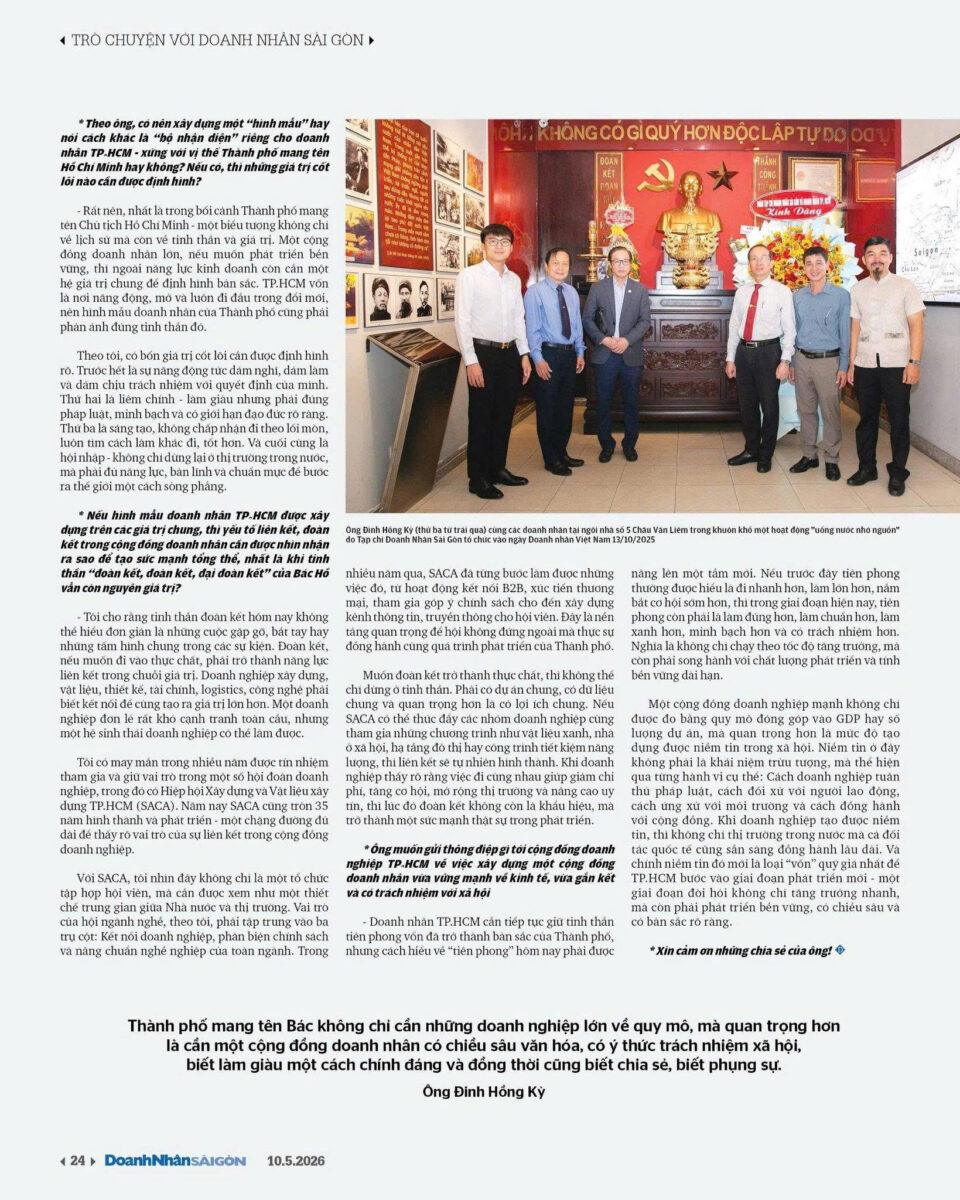
In Ho Chi Minh City — where businesses are highly concentrated and economic activities move at a fast pace — these bottlenecks become even more evident. A single delayed procedure or unclear regulation can create a chain reaction affecting many businesses at once. In business, time is always a very tangible cost. A delayed investment opportunity by just a few months may mean not only losing progress, but losing the market entirely.
- Going forward, what key solutions are needed for Resolution 68 to penetrate more deeply into business realities?
- We can focus on several core solutions.
First, management should shift from qualitative assessments to measurement through specific indicators. Factors such as licensing time, compliance costs, frequency of inspections, and the rate of on-time file processing should be publicly disclosed and regularly monitored. Only with clear data can we identify where the bottlenecks exist.
Second, officials who dare to act and take responsibility must be protected. If the current mechanism still makes implementers fear mistakes more than delays, businesses will always be the ones left waiting.
Third, there must be complete transparency in sensitive areas such as land, capital access, bidding, and incentives. When opportunities are made public, small and medium-sized enterprises can participate fairly instead of being left outside the game.
Fourth, we must be extremely cautious about criminalizing civil and economic relations. Only cases with sufficient grounds and genuinely criminal nature should be handled criminally; otherwise, economic and civil mechanisms should prevail. This is crucial for restoring confidence among entrepreneurs.
Finally, business associations should not merely appear at events. They need to become regular policy feedback channels with data, substantive voices, and continuous engagement in the implementation process, rather than contributing only during conferences.
- From the business perspective, what changes and preparations are necessary to better seize the opportunities brought by the Resolution?
- Businesses certainly cannot just wait for policies. To take advantage of Resolution 68, enterprises must upgrade themselves.
At Secoin, for example, we have always believed that long-term success requires real capabilities: real products, real quality, real governance, and a real brand. Secoin currently operates nine factories, exports to over 60 countries, and pursues environmentally friendly building materials as a long-term strategy rather than a temporary trend.
More broadly, businesses seeking to capitalize on policy opportunities must first ensure transparency in finance, governance, labor practices, and taxation. Second, they need digital transformation to reduce costs and manage risks. Third, they must prepare for new standards regarding ESG, traceability, and carbon emissions, as international markets are changing rapidly. Fourth, businesses should cooperate and participate in supply chains together instead of operating independently.
- The emphasis on the private economy today is not a temporary trend, but a consistent policy line of the Party and the State, especially rooted in President Ho Chi Minh’s letter to the business community on October 13, 1945. What are your thoughts on this, particularly regarding how his ideology has been inherited in today’s policies on private economic development?
- Looking back at President Ho Chi Minh’s letter to the business community on October 13, 1945, we can clearly see a pioneering vision, even in the earliest days of independence. Right after the country regained sovereignty, he recognized the role of entrepreneurs in national development, not as a peripheral force, but as an important component of the economy.
The spirit throughout the letter, especially the idea that “national affairs and business affairs always go hand in hand,” reflects a highly progressive perspective: the development of businesses is closely tied to the prosperity of the nation. Entrepreneurs do business not only for personal benefit, but also as part of building the country.
From that perspective, current policies on the private economy, especially Resolution 68, clearly inherit that spirit in today’s development context. If in 1945 it was a call for the business community to accompany the nation in its early reconstruction phase, today it is a stronger affirmation that the private sector must be properly recognized, trusted, protected, and more importantly, given sufficient space to develop substantively and contribute more deeply to the national economy.
- This year marks the 50th anniversary of Ho Chi Minh City bearing President Ho Chi Minh’s name, and also the 136th anniversary of his birth. As a businessman, what significance do these milestones hold for the business community in the city named after him?
- I believe this anniversary is an opportunity for entrepreneurs in Ho Chi Minh City to ask themselves: Beyond revenue and profit, what have we contributed to this city?
A city bearing Uncle Ho’s name does not only need businesses large in scale; more importantly, it needs a business community with cultural depth, social responsibility, the ability to create wealth ethically, and the willingness to contribute and serve society. Those are the sustainable values inspired by the spirit of the city named after President Ho Chi Minh.
- In your opinion, which values, ideologies, and moral qualities of Ho Chi Minh remain relevant and should be applied in business management today?
- In my opinion, there are five essential values for businesses today: integrity, thrift, closeness to the people and employees, lifelong learning, and matching words with actions.
In modern governance, these translate into transparency, efficiency, people-centered management, continuous innovation, and accountability. A sustainable business cannot simply be good at selling products; it must build trust with employees, customers, partners, and society.
- Has studying and following Ho Chi Minh’s ideology among entrepreneurs become truly substantive today?
- Some businesses genuinely incorporate those values into governance, behavior, and development strategies. However, many still stop at formality, slogans, or repeated rhetoric rather than concrete action.
In the past, we experienced periods focused heavily on memorization and ceremonies, but lacking real transformation into practical action. What is truly needed is a direct, practical approach focused on effectiveness and responsibility. In that sense, practical thinking, clarity, and action-oriented implementation are closest to Ho Chi Minh’s spirit, because he himself was highly pragmatic and valued results and action.
Learning from Ho Chi Minh does not mean hanging slogans in meeting rooms or repeating famous quotes. It is reflected in concrete business practices: paying employees on time, fulfilling tax obligations transparently, maintaining honest product quality, refusing to sacrifice the environment for short-term profits, avoiding opportunistic business practices, and sharing responsibility with the community. In other words, entrepreneurs learn from Ho Chi Minh not through words, but by building ethical businesses and operating them ethically every day.
- How does Secoin implement the spirit of learning and following Ho Chi Minh?
- At Secoin, we do not treat learning and following Ho Chi Minh as a separate movement or a slogan on the wall. Instead, that spirit is integrated directly into the company’s daily operations, from production to governance.
We pursue eco-friendly, non-fired building materials aimed at conserving natural resources and reducing environmental impact. At the same time, we implement practical initiatives such as caring for employees’ well-being, maintaining internal charitable funds, and participating consistently in social activities rather than only at specific moments.
Looking further ahead, Secoin’s path is to build a Vietnamese brand capable of entering the global market through genuine capability rather than short-term advantages. For us, a quality brick is not judged only by durability, color, or design, but also by the story behind it — how the company producing it treats the environment, workers, and community.
- In your opinion, should Ho Chi Minh City develop a distinct “identity” or “model” for its entrepreneurs worthy of a city named after President Ho Chi Minh? If so, what core values should define it?
- Absolutely, especially for a city named after President Ho Chi Minh — a symbol not only of history but also of spirit and values.
A large entrepreneurial community aiming for sustainable development needs not only business capability but also a shared value system shaping its identity. Ho Chi Minh City has always been dynamic, open, and innovative, so its entrepreneurs should embody those qualities.
In my opinion, four core values should be clearly defined.
First is dynamism — daring to think, act, and take responsibility for one’s decisions.
Second is integrity — creating wealth lawfully, transparently, and within clear ethical boundaries.
Third is creativity — refusing to follow old paths and constantly seeking better approaches.
Finally, integration — not limiting oneself to the domestic market, but possessing the capability, confidence, and standards to compete globally on equal footing.
“Ho Chi Minh City does not only need large-scale enterprises. More importantly, it needs a business community with cultural depth, social responsibility, the ability to create wealth ethically, and the willingness to contribute and serve society.”
— Mr. Dinh Hong Ky
- If a shared entrepreneurial identity is established for Ho Chi Minh City, how should solidarity and cooperation within the business community be viewed to create collective strength, especially as President Ho Chi Minh’s spirit of “solidarity, solidarity, great solidarity” remains deeply relevant today?
- I believe solidarity today cannot simply mean meetings, handshakes, or group photos at events. If solidarity is to become substantive, it must evolve into the ability to connect within value chains. Construction firms, material suppliers, designers, financiers, logistics companies, and technology enterprises must work together to create greater value collectively.
A single enterprise struggles to compete globally, but an ecosystem of businesses can.
I have been fortunate over many years to participate in and hold leadership positions in several business associations, including the Ho Chi Minh City Construction and Building Materials Association (SACA). This year also marks SACA’s 35th anniversary — a journey long enough to clearly demonstrate the role of connectivity within the business community.
For SACA, I believe it should not merely be an organization gathering members, but rather an intermediary institution between the State and the market. In my view, industry associations should focus on three pillars: connecting businesses, providing policy feedback, and raising professional standards across the industry.
Over the years, SACA has gradually accomplished these goals through B2B networking, trade promotion, policy consultation, and communication channels for members. This is an important foundation for ensuring that associations do not stand outside the development process, but genuinely accompany the city’s growth.
For solidarity to become meaningful, it cannot stop at spirit alone. There must be shared projects, shared data, and more importantly, shared interests. If SACA can promote collaborative programs involving green materials, social housing, urban infrastructure, or energy-saving projects, then natural linkages will emerge. When businesses clearly see that cooperation helps reduce costs, increase opportunities, expand markets, and enhance credibility, solidarity will no longer be a slogan, but a genuine driving force for development.
“When businesses clearly realize that moving together helps reduce costs, increase opportunities, expand markets, and enhance credibility, then solidarity is no longer just a slogan, but becomes a real source of strength for development.”
— Mr. Dinh Hong Ky
- What message would you like to send to the Ho Chi Minh City business community regarding the development of a business community that is both economically strong and socially responsible?
- Entrepreneurs in Ho Chi Minh City must continue to uphold the pioneering spirit that has become the city’s identity. However, the meaning of being “pioneering” today must be elevated to a new level.
In the past, pioneering often meant moving faster, growing larger, or seizing opportunities earlier. Today, it must also mean doing things more correctly, more professionally, more sustainably, more transparently, and more responsibly. It means pursuing not only growth speed, but also development quality and long-term sustainability.
A strong business community should not only be measured by its GDP contribution or number of projects, but more importantly by the level of trust it creates within society.
Trust is not an abstract concept; it is reflected in every concrete action: how businesses comply with laws, treat employees, protect the environment, and support the community. When businesses build trust, not only the domestic market but also international partners will be willing to cooperate long-term.
And that trust is ultimately the most valuable form of “capital” for Ho Chi Minh City as it enters a new development phase — one that requires not only rapid growth, but also sustainable, profound, and distinctive development.
Article link on Doanh Nhan Sai Gon Newspaper: https://doanhnhansaigon.vn/ong-dinh-hong-ky-chu-tich-cong-ty-secoin-chu-tich-hiep-hoi-xay-dung-va-vat-lieu-xay-dung-tp-hcm-hoc-bac-la-lam-doanh-nghiep-tu-te-moi-ngay-336256.html