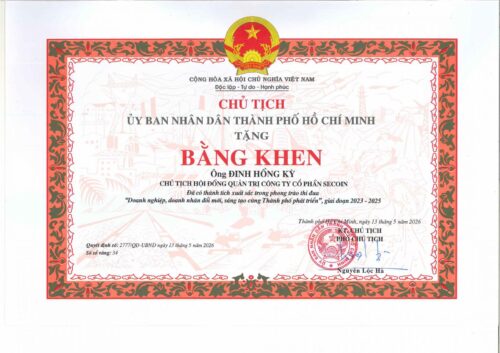
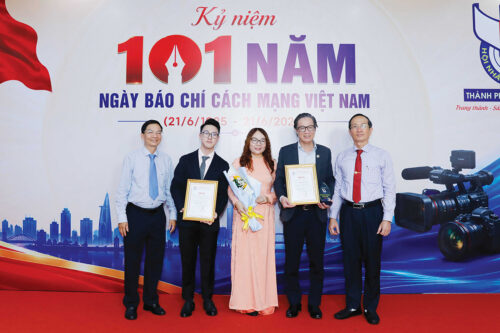
Among successful businessmen, Chairman of the Board of Directors of Secoin Construction Materials Joint Stock Company (Secoin) Dinh Hong Ky is a typical face of the young generation who own family businesses.
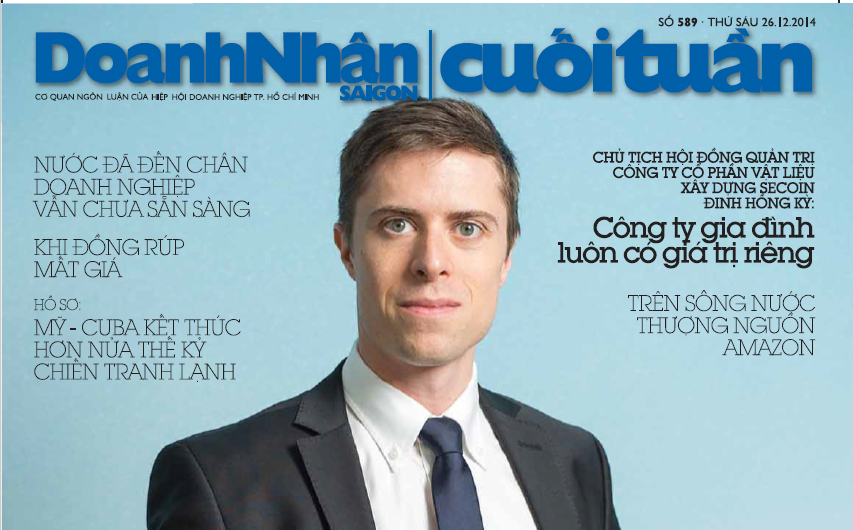
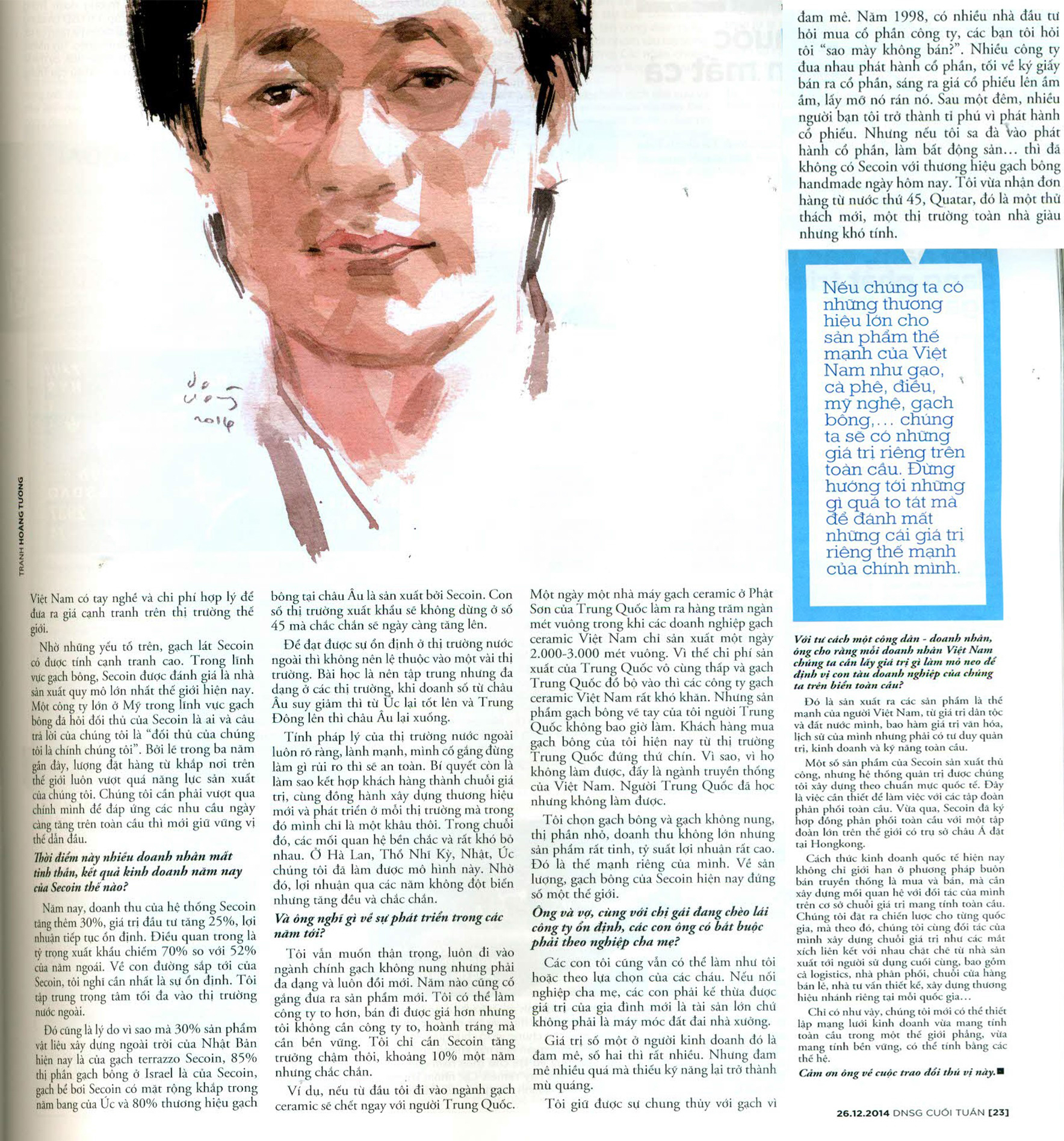
As a joint-stock company with over 70% ownership held by his family, Secoin is one of the largest non-fired tile companies in Vietnam, successfully penetrating even the most demanding markets. In a candid conversation, he shared with Saigon Entrepreneur Weekend valuable experiences from the early days of startup to success in the business world.
* I heard you have repeatedly declined selling shares to change the ownership structure?
– The main ownership remains within our family. Drawing from the successful lessons of family businesses worldwide, we maintain the family company model as our core going forward.
However, we also expand the company model to include partners and employees who contribute to Secoin’s mission. My view on choosing partners is that they must genuinely contribute to production and business activities, not merely financial investment. We also have no intention to turn Secoin into a public company.
I believe businesses distinguish themselves through deep and sustainable development — how to turn buyers into partners, jointly building a global value chain from manufacturers, logistics companies, distributors, retail systems, designers, to brand building… Participating in such value chains ensures business sustainability.
Family companies also benefit from stability, without term-based thinking, where the owner builds long-term development strategies, sometimes spanning generations, directly managing the business for many years, so the company’s value is not disrupted. Many foreign partners and investors appreciate and remain loyal to our company because of family values.
In today’s economic context, family businesses remain a suitable and sustainable model. The success stories of large family groups dominating the economies of the US, Japan, Korea, Germany… serve as a model for Vietnamese enterprises to aspire to.
* Is your company’s growth path very different from other types of businesses?
– In 1989, Vietnam’s economy was still heavily subsidized, with only state-owned enterprises or cooperatives (the Enterprise Law came in 1991). My father, Professor Dinh Xuan Ba, didn’t know on what basis to establish a company, so he had to borrow the name of the Vietnam Informatics Association to form a legal entity.
Secoin Informatics Company was born alongside FPT Informatics Company — the two IT companies at that time. Secoin initially traded computers in overseas markets.
I went abroad in 1990 as an officer at the Vietnam Trade Office in Poland. That was my “inside” role, while my “outside” role was managing Secoin company headquartered in Poland.
We mainly accumulated capital through trading — buying computers from Poland to Russia, exchanging goods for electrical cables from Russia to Vietnam. Later, we handled debt repayment goods between Vietnam and Eastern European countries. Also, I gathered textiles in Vietnam to export to Poland, Czechoslovakia, Hungary, accumulating some capital.
In 1995, I returned home to become director of Secoin Vietnam. That’s when I noticed all construction bricks in Vietnam were fired bricks, while in Europe 90% used non-fired bricks.
I saw a huge market gap. Secoin gradually reduced trade activities in Eastern Europe to focus on the promising new field of researching and producing non-fired bricks in Vietnam.
Since 1997, acting as an agent for foreign technology companies transferring technology to Vietnam, we have transferred technology to 50 non-fired brick factories nationwide. In 1996 I opened my first brick workshop, in 1999 bought a Japanese brick factory and built Secoin Ha Tay.
In 2001 I acquired a brick factory from Contrexim Company (under the Ministry of Construction), turning it into Secoin Xuan Mai. In 2003, I built two new factories: Secoin Hung Yen.
By 2007, I purchased another Ministry of Construction factory in Ho Chi Minh City, and in 2009 took over Thanh Danh tile factory (then near bankruptcy). These two factories, once state-owned enterprises performing poorly, became Secoin Binh Duong and Secoin Binh Chanh.
Currently, we are rushing to complete Secoin Da Nang factory installation for product launch in January 2015. To date, Secoin has six factories with 10 diverse lines of non-fired building materials.
* What was your toughest moment as the company leader?
– I’ve had failures too, closing a factory but selling it without loss. Previously, I realized Vietnam lacked a big market for grinding stones used to polish tiles and natural stone. I invited an Italian partner to open a grinding stone factory in Hung Yen.
We bought Italian technology and equipment, but 95% of raw materials were imported from China — and that was our “death.” The factory had Italian equipment and a great market, theoretically promising strong growth, but raw materials entirely from China.
China heavily taxed those raw materials when exporting abroad, but the finished products made from them and exported from China were almost untaxed.
I failed. The factory shifted to producing colored tiles. Another project was producing particleboard, which failed, and I had to sell the production line.
Another time I bought a nearly bankrupt state-owned factory in a “rescue” move. Taking over, we spent five to seven years clearing debts, restructuring staff, and especially changing the mindset of people used to state mechanisms.
Debt can be covered with money, but changing people’s mindset is very hard. I realized building a new factory takes about a year, but buying a dying business requires five to seven years of “medicine” before it could operate effectively.
The lesson I learned: stay focused on the core business and be extremely proactive in investment — relying on a single source for raw materials or markets means risking sudden death.
* Some family businesses in Vietnam reportedly stagnate or decline beyond a certain size due to management limits. Do you think the family business model is too tight a fit to allow company growth?
– I don’t think so! That might have happened in the past, but today is the era of globalization and knowledge economy, where business development depends less on ownership.
Even in current family businesses, shareholders are family members. Giant multinational groups like BMW in Germany or Korean Air in Korea have primary family ownership.
* So, what do you think is the most important value a purely Vietnamese business can contribute to the economy and society?
– The most important value is accumulated knowledge within products. The company’s criterion is to be an intellectual capital-rich enterprise. I want to make building materials that do not harm the environment.
Then expand to biotechnology and energy. Secoin Energy Joint Stock Company has operated with the aim to develop the Vietnamese boiler industry, using green energy sources like rice husk ash, not coal or wood (which requires deforestation). That is the business of the future.
For me, the most important value must be created by our own hands, not just pure profit from importing and reselling. I don’t do business just to make money. I don’t need grandiosity, just to do good for my family and workers — not owing salaries, not making them suffer, not exploiting them — that’s already difficult enough.
* After years of persistent business in the global market, have you identified obstacles that prevent purely Vietnamese companies from expanding far?
– The biggest problem is awareness. Meeting foreign clients does not mean just saying “my product is very good, very cheap”! To succeed abroad, we need to understand what they want and what we have. We must produce what they need, not what we like.
Find your own strengths and competitive advantages and exploit them. As we integrate globally, it’s crucial to position Vietnamese products themselves.
It’s hard to compete globally with planes, cars, computers, steel… But if we have strong brands for Vietnamese specialties like rice, coffee, cashew, handicrafts, cement tiles… we will have unique global values.
Don’t aim for grand things and lose your own strong values.
Take Secoin cement tiles as an example. Our competitors are long-established companies from countries like Mexico, Morocco, Chile, Tunisia, Brazil…
To compete, besides quality and delivery time (which are basic requirements), our strength is intellectual input in every product, creating special effects through Vietnamese artisans to make unique, distinctive tiles noticeable at first glance.
Besides that, Secoin tiles crystallize Vietnamese historical tradition with a fusion of Eastern and Western aesthetics suitable for both classical and modern architecture.
Another major advantage is skilled Vietnamese labor with reasonable costs, allowing competitive pricing worldwide.
Thanks to these factors, Secoin tiles are highly competitive. In the cement tile sector, Secoin is currently considered the largest manufacturer worldwide.
A large US cement tile company once asked who our competitors were, and we replied: “Our competitor is ourselves.” Because in the past three years, orders worldwide have always exceeded our production capacity.
We must surpass ourselves to meet growing global demand and maintain our leading position.
* Many entrepreneurs lose morale these days; how was Secoin’s business result this year?
– This year, Secoin’s revenue grew by 30%, investment value increased by 25%, and profits remained stable. Importantly, export proportion reached 70% compared to last year’s 52%. Looking ahead, I think stability is key. I focus heavily on foreign markets.
That’s why 30% of outdoor building materials in Japan now come from Secoin terrazzo tiles; Secoin holds 85% of Israel’s cement tile market; our swimming pool tiles are widely used in five Australian states; and 80% of European cement tile brands are made by Secoin. The export market will not stop at 45 countries but will surely grow.
To achieve stability abroad, do not rely on just a few markets. The lesson is to focus but diversify markets — when European sales fall, Australia rises; when the Middle East grows, Europe falls.
Foreign markets have clear, healthy legal frameworks; if we avoid risky actions, we are safe. The secret is how to connect customers into value chains, jointly building new brands and developing in each market, where we are just one link.
In this chain, relationships are strong and hard to break. We have established this model in the Netherlands, Turkey, Japan, and Australia. Thanks to that, profits have grown steadily without sudden spikes.
* What are your thoughts on future development?
I remain cautious, staying in the core non-fired brick sector but with diversity and continuous innovation. Every year, I strive to launch new products.
I could make the company bigger and sell it at a higher price, but I don’t want a large, flashy company — I want sustainability. I want Secoin to grow slowly but surely, about 10% a year.
For example, if I had entered ceramic bricks from the start, I’d die quickly against the Chinese. One ceramic factory in Foshan, China produces hundreds of thousands of square meters daily, while Vietnamese ceramic businesses only produce 2,000–3,000 square meters a day.
Chinese production costs are extremely low, so Chinese ceramic bricks flood the market, making it very hard for Vietnamese companies. But no Chinese company can make hand-painted cement tiles like mine.
My current customers from China rank ninth because they can’t replicate it — it’s a traditional Vietnamese craft. The Chinese have tried but failed.
I choose cement tiles and non-fired bricks — small market share, modest revenue but very refined products with high profit margins. That’s my unique strength. In production volume, Secoin’s cement tiles are now number one worldwide.
* You, your wife, and your sister are steering the company steadily; do your children have to follow your path?
– My children can either follow me or choose their own paths. If they succeed me, they must inherit the family’s values — that’s the greatest asset, not machinery or factories.
The number one value for a businessperson is passion; number two, many others. But too much passion without skill leads to blindness.
I remain loyal to tiles because of passion. In 1998, many investors asked to buy shares; friends asked why I didn’t sell. Many companies rushed to issue shares, and overnight, stocks soared, making many friends billionaires.
But if I had fallen into issuing shares or real estate, there would be no Secoin with its handmade cement tile brand today.
I just received an order from my 45th country, Qatar — a new challenge, a market of rich but demanding customers.
* As a citizen and entrepreneur, what values do you think Vietnamese entrepreneurs should anchor to steer their business ships on the global ocean?
– That is to produce products that are Vietnamese strengths, from our national and cultural values, including our history, but with global management, business mindset, and skills.
Some Secoin products are handmade, but our management system follows international standards. This is necessary to work with global distribution corporations. Recently, Secoin signed a global distribution contract with a large global group headquartered in Hong Kong.
Today’s international business is not just traditional buy-sell methods, but building relationships with partners based on a global value chain.
We set strategies for each country, building with partners a value chain tightly linked from manufacturer to end user, including logistics, distributors, retail chains, design consultants, and brand building for each country.
Only this way can we establish a business network that is both global in a flat world and sustainable over generations.
* Thank you for this interesting interview.