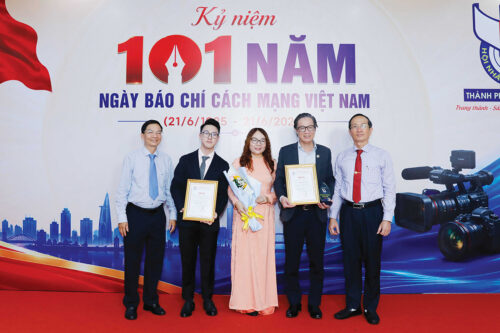
An article by Mr. Dinh Hong Ky, published in the VIEWPOINT section on vnexpress.net on May 2, 2019.
When I was in primary school in Hanoi, in the 1970s, my uncle who worked at the Pasteur Institute of Hygiene and Epidemiology went on a business trip to Bulgaria and brought back a very beautiful foreign “budoong” jacket. I eagerly wore that extremely luxurious jacket to school and was immediately surrounded by my classmates. Some pointed their fingers at my face, shouting: “Hey, rich kid!” and they stayed away from the “rich kid.” The very next day, the “forbidden” jacket was never touched again.
In my immature mind back then, “rich” was a terrifying word, a grave sin—even worse than stealing or vandalism. Over many years of growing up, I witnessed many people either intentionally declaring themselves “third-generation poor farmers” in their biographies or proudly claiming their ancestors were impoverished peasants.
But now, sitting at some dinner tables, I no longer hear anyone proudly boast about being third-generation poor farmers. Instead, some wealthy businessmen loudly claim, “My grandfather was a landlord,” or politicians boast, “My ancestor was the village chief during the French colonial era,” with great pride. Social perception has taken a big step forward in its attitude toward people with money, as well as toward business and wealth creation.
In the early years of the country’s Renovation (Đổi mới) era, I graduated from university and went abroad. There, I deeply felt the shame of poverty, and the motivation to “escape poverty” followed me for many years. Together with my parents, we built a private enterprise, working diligently for over 30 years until recognized by the government as a national brand.
I was very pleased that the government’s perception of private economic actors has changed markedly over time. From once being regarded as a small, “dependent” component in the economy—and many private businesspeople being called mere “merchants,” looked down upon with whispers and scrutiny—they are now considered equal to state-owned enterprises, once the “favored children” positioned as the economy’s steel fist in many activities.
However, nearly 30 years after private enterprises were “unshackled,” social attitudes toward this sector are still not truly impartial. Many still discriminate and envy the “rich,” and some still relish the failures and misfortunes of famous entrepreneurs or the family breakdowns of those who founded large brands.
In practice, I do not know when private businesses will escape the mentality of always having to prove their innocence when dealing with regulatory agencies. It is not uncommon to see customs officers or tax managers scrutinizing business activities like doctors searching for germs.
Outside society, many families do not want their children to work for private companies, even if the monthly salary is 10 or 20 million VND. Instead, they spend hundreds of millions of dong to bribe for a government job paying 4 million VND a month. This mindset not only harms the economy but also distorts the values of an entire future generation. Social morality also declines from this distortion.
The unfairness has shifted form. People have spoken a lot about inequality between private and state-owned enterprises, but now the competition has transformed into a new shape: between pure private businesses and private enterprises disguised as state-owned; or private companies acting as political insiders’ “backyard” firms—a concept called “crony capitalism” or “interest groups” manipulating policies to create an unhealthy competitive environment.
When I talk with my partners in the US and Canada, they share that successful private businesses there are well protected by the government and receive special respect from society and the public. American billionaire David Tepper once caused a serious crisis in New Jersey in 2015 when he decided to leave and move his business to Florida. New Jersey faced an unprecedented budget crisis after losing hundreds of millions of dollars a year in personal income tax revenue from him.
But in Vietnam, not everyone understands that many public benefits like roads, infrastructure, schools, and healthcare come from tax revenues with a significant contribution from private economic activities, including income taxes from “the rich.” The private sector is a key pillar of the economy, generating income, creating jobs, changing habits and business life. They deserve more fair and active cooperation from the authorities, recognition, and respect from society.
We also hope the government focuses on creating a constructive legal framework to build a fair, transparent business environment that sincerely embraces technology to govern the country, eliminate corruption, eradicate administrative evils, and naturally ride the waves of global technological change. On this “soft infrastructure,” private businesses can join hands with the government to seize major external opportunities.
And not only the government and society, but private enterprises themselves must change their mindset: stop doing business through connections with officials. Some “rich” people need to learn to respect the law and community interests more, strictly comply with tax payments, enrich themselves through knowledge, work hard, innovate in management, and integrate into the global arena.
Only then can they apply appropriate technology, protect the environment, and build sustainable businesses. Only then will the “rich” be respected, private enterprises become leaders, and the “merchants” become the “favored children.”
Dinh Hong Ky